Overland SUMMER CAMPS FOR 4TH - 12TH GRADERS Family Login
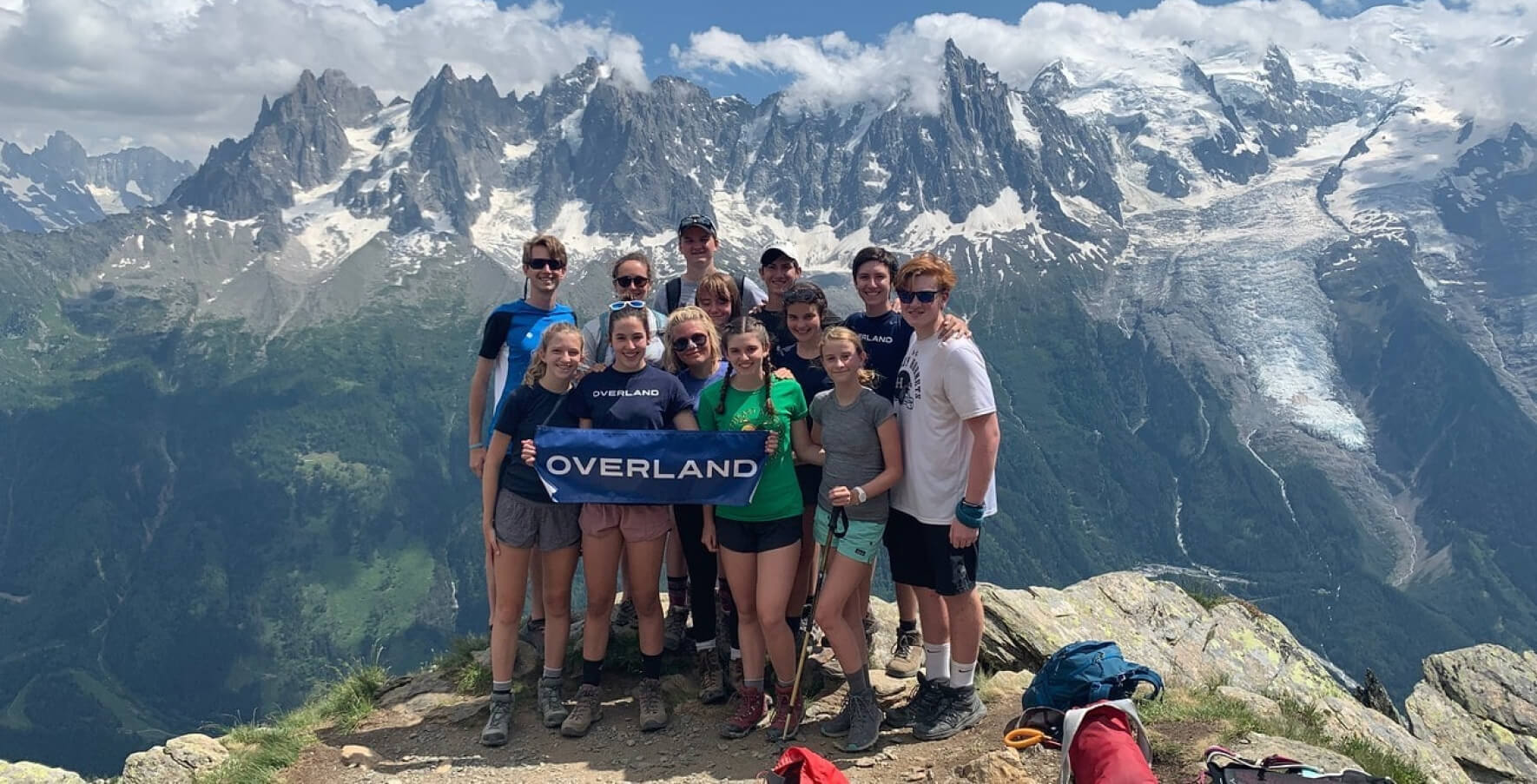
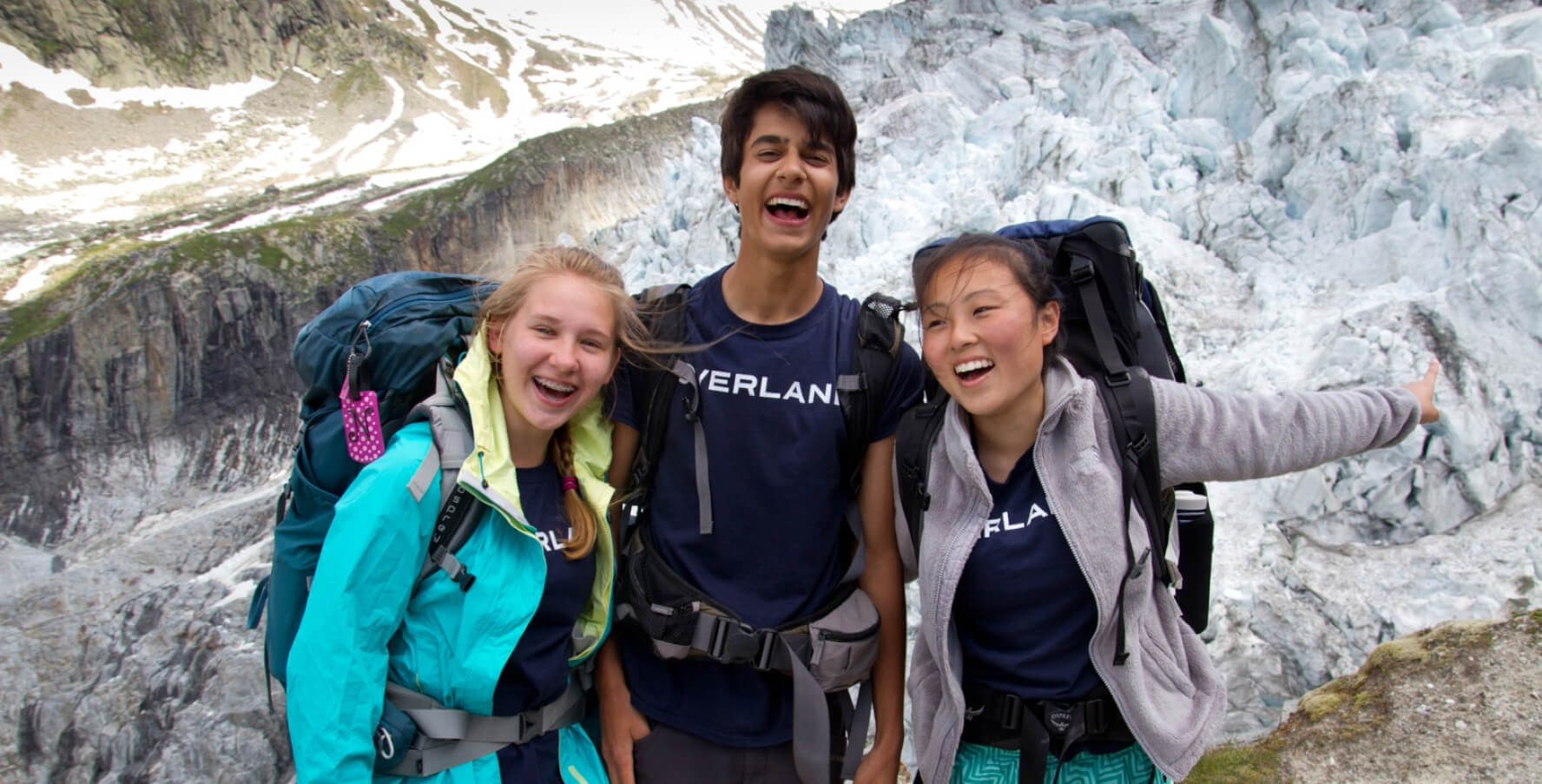
open to grades 7-12 Overland’s Language & Hiking France allows students to explore France in a small, supportive, wholesome and fun-loving Overland group. We’ll learn the language while experiencing French life and culture in quaint Alpine villages and the bustling cities of Paris and Annecy.
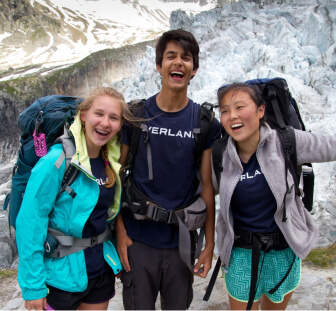
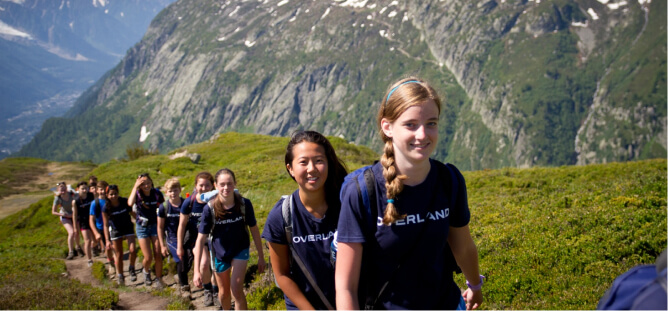
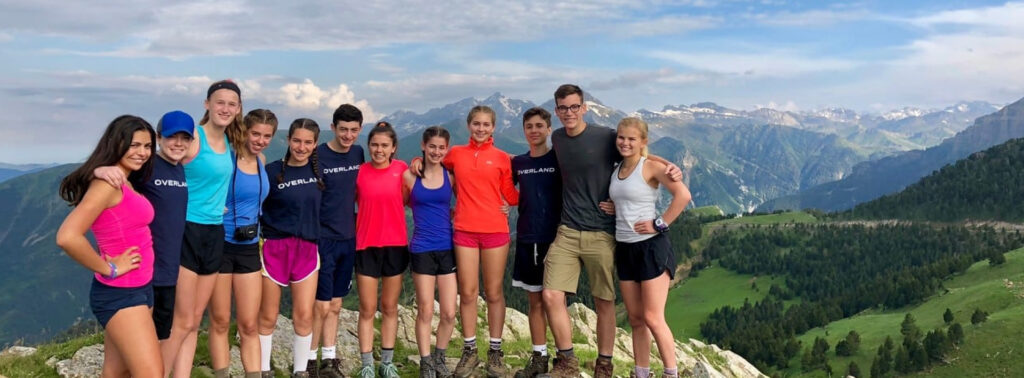
Based in Chamonix in the French Alps, every weekday we’ll attend small, private classes with native-speaking teachers at a language school. After school, we’ll enjoy daily hikes in the spectacular Alps. Off the trail, Overland’s leaders and teachers will organize activities to engage each student in the French language and culture. On our two weekends we’ll camp in nearby Alpine villages and hike to some of the best viewpoints in the Mont Blanc valley. At the end of the trip, we’ll travel to Paris to discover the parks, neighborhoods and museums of France’s greatest city. Over the course of three weeks, our daily lessons, hikes, activities and weekend camping trips will strengthen our language skills while showing us the beauty and variety of France.
Based in the town of Chamonix in the beautiful Mont Blanc Valley, every weekday we’ll attend small, private classes with native-speaking teachers in a language school. After school, we’ll hike along the many trails in the French Alps. During the weekends, we’ll camp in local Alpine villages and along the shores of Lake Annecy as well as spend full-days hiking to some of the best viewpoints that these incredible mountains have to offer. Activities will be organized by Overland’s leaders and the group’s French teachers to give students the opportunity to employ their language skills in real-world conversations. At trip end, we'll head to Paris to explore its many landmarks, museums and unique neighborhoods. Over the course of four weeks, our daily lessons, hikes, activities and weekend camping trips will strengthen our language skills while showing us the beauty and variety of France.
“The balance between academic learning and experience was beautifully struck.” Nina Cheney, Atlanta, Georgia
Language & Hiking France: Three Weeks
For students completing grades 7-9 in June 2013
Language & Hiking France: Four Weeks
For students completing grades 9-12 in June 2013
Multiple groups organized by grade
Call us (413-458-9672) to check on current availability
4 (1-10, 1 is easiest)
Starts in Geneva, Switzerland
Ends in Paris, France
Language & Hiking France: Three Weeks
Sunday, June 23 to Friday, July 12
Sunday, July 14 to Friday, August 2
Language & Hiking France: Four Weeks
Saturday, June 29 to Friday, July 26
3-week program: $5995
4-week program: $6995
What the trip fee includes:
What the trip fee doesn't include:
“The best month of my life!” Katherine Graves, Darien, Connecticut
Unlike most Overland programs, Language & Hiking France spends a good deal of time in cities. As with every Overland program, our high expectations and basic rules apply at all times. There are no late night activities and drinking alcohol is strictly forbidden.
Language & Hiking France: Three Weeks
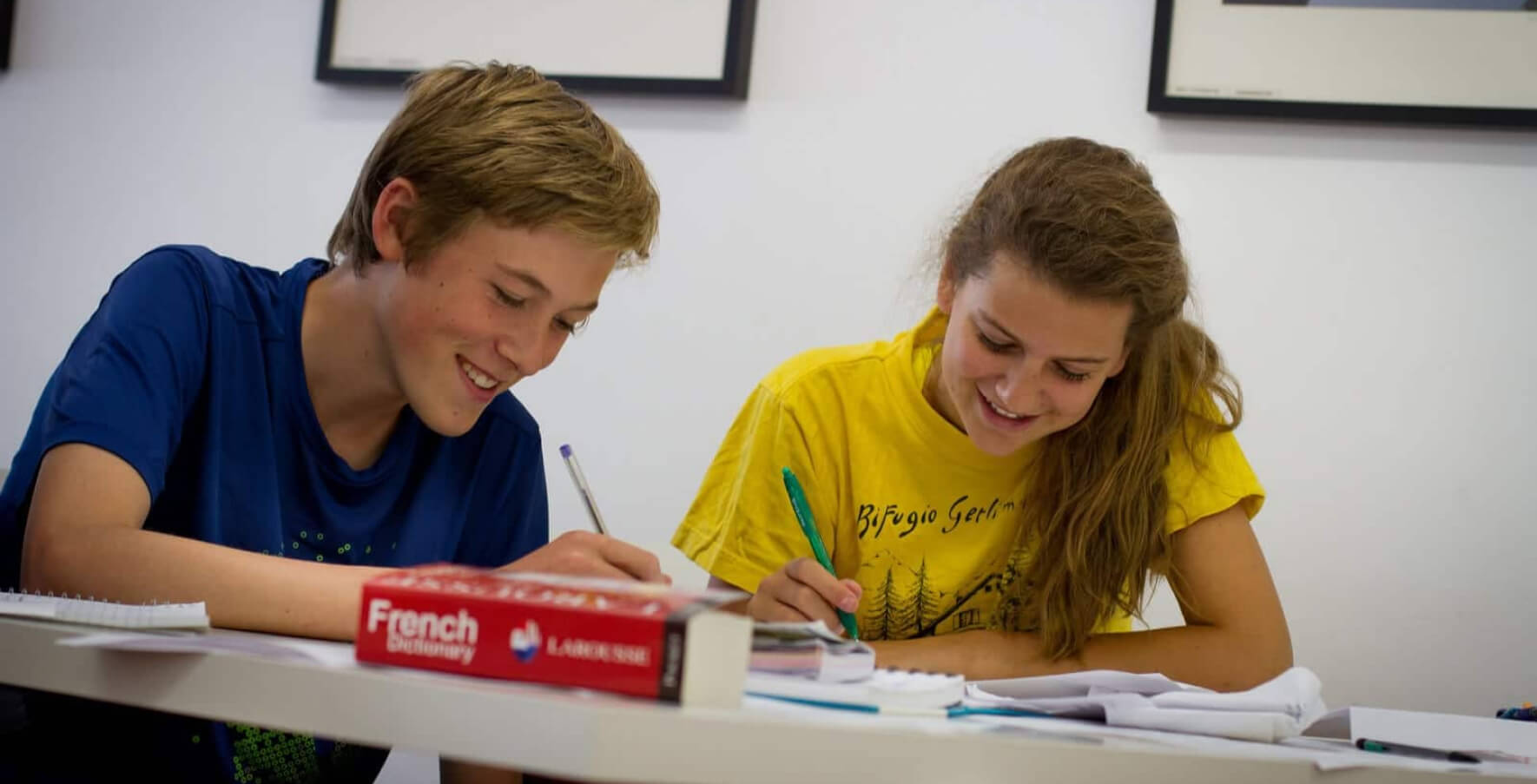
50 hours of native-speaker classroom-based instruction
30 additional hours of structured language immersion
Language & Hiking France: Four Weeks
65 hours of native-speaker classroom-based instruction
40 additional hours of structured language immersion
Overland offers two Language & Hiking France programs - each requires experience with French.
We prefer that students enrolling in Language & Hiking France programs have at least one year of French. There are several instances, however, in which we grant exceptions to this requirement. If your son or daughter has had comparable language practice in French outside of formal class instruction, or if they have a background in another foreign language, for example Latin or Spanish, that may be sufficient for this program. Since Overland groups are split into smaller language classes upon arrival, we can accommodate varying levels of language skills. The most important factors for success on this program are the student’s enthusiasm for learning the language and his or her dedication to practicing the language throughout the program. Please give our office a call to discuss your student’s suitability for our programs.
All of Overland's Language programs abroad require dedication to mastering a language and understanding a new culture. Although there is no language pledge, students will be expected to speak only French while in class and during structured language immersion outside of class. Students will be encouraged to speak French amongst themselves outside of the classroom as much as possible.
Participants should be prepared for day hikes in the Alps on commonly-used trails. The groups will hike together and take breaks for rest, snack and water as necessary. The terrain in the Alps can be challenging at times –there are some long, steep, rocky sections and occasionally some hiking on snow. Groups will typically hike between 1 to 4 miles each day. Due to the terrain and time for breaks, this usually averages to between 2 and 4 hours per outing (slightly longer on weekends). Experience among participants will vary and no previous hiking or backpacking experience is required.
“I will definitely go on another Overland trip. Thanks for three great weeks!” Ben Kieff, Newton, Massachusetts
Itineraries shown below subject to change
Our adventure will start at the Geneva International Airport in Switzerland. Once everyone has arrived, we will travel to Chamonix. Along the way, tunnels through mountains and bridges over icy-blue torrents will eventually bring us to the base of Mont Blanc, the tallest mountain in Europe at 15,748 feet. The Mont Blanc Valley is a spectacular sight to be seen with jagged mountain peaks still in the process of being carved by glaciers that flow down the sides of the valley towards the town. We will make our home for the next three weeks in a private chalet. Upon arrival, we will unpack our bags and then head outside to play some games and walk around Chamonix Village. We’ll cook dinner together before heading to bed.
Our first full-day in the Chamonix Valley will start with us walking to our school and meeting our native-speaking French teachers. We’ll take a placement test to give the teachers an idea of everyone’s French levels. After school, we’ll get out on the trails for an afternoon hike. The first couple of days will consist of introductory hikes around the valley, which will give us time to play plenty of games and get to know one another better. We’ll return to our chalet after the hike to cook dinner.
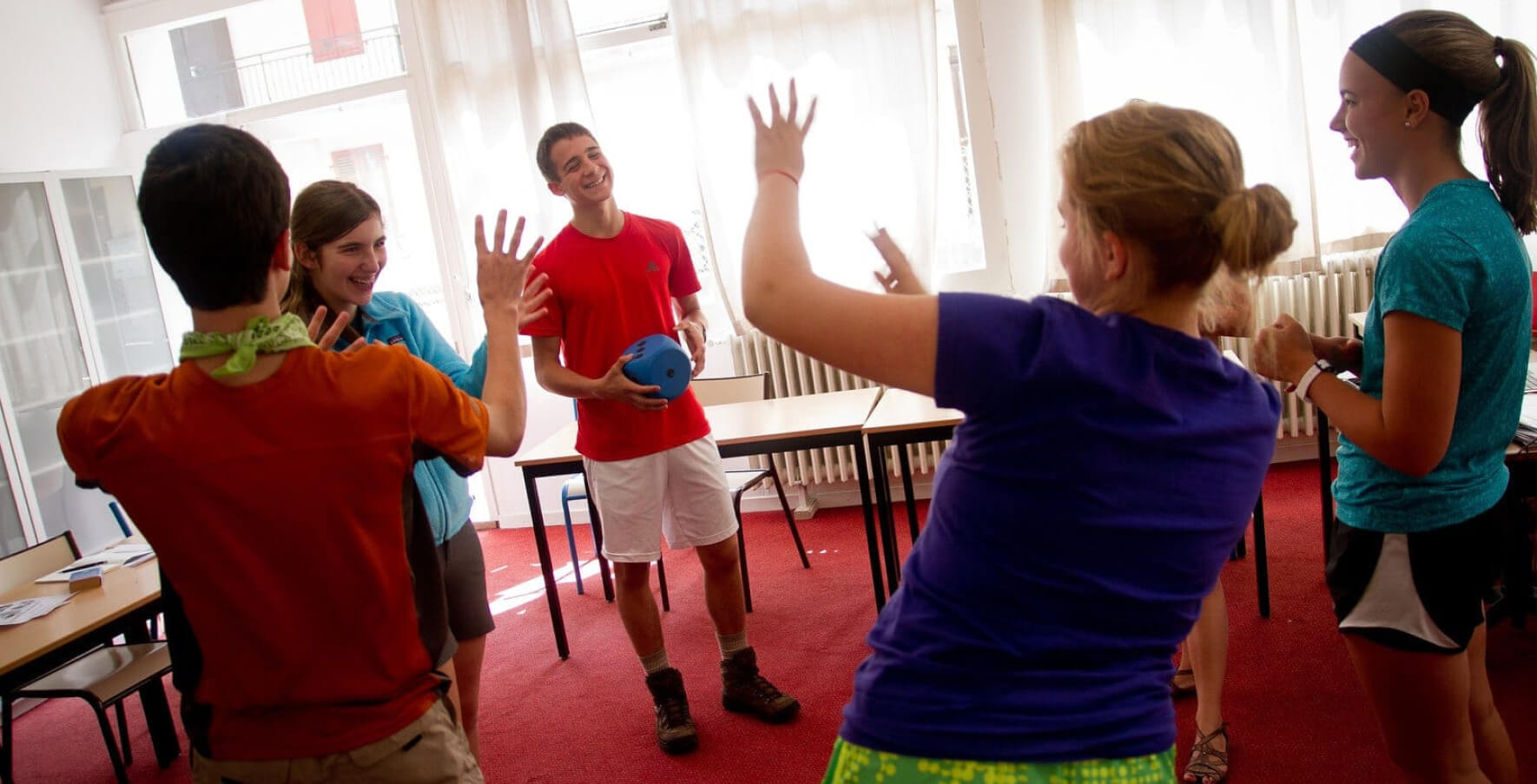
The next couple of days will be spent on strengthening both our language skills and hiking abilities. Our mornings will consist of French class with two teachers each working with our Overland group. Our time in the classroom is devoted to having an enjoyable learning experience and improving our level of comfort with French. Whether it is performing a short skit or heading into Chamonix’s main plaza to interview local residents of the valley, our teachers will base their lesson plans around interactive situations - meant to get us out of the classroom - which allows further development of our speaking and listening comprehension. Our afternoons will be spent exploring the many trails throughout the Mont Blanc Valley. Hikes such as Le Chapeau to the Mer de Glace overlook or Chalet La Floria are meant to challenge us physically while also offering the opportunity to reach fantastic viewpoints overlooking the surrounding mountains, glaciers, and valley below. To make the most of our time in this beautiful place, we will spend one full day during the week out on the trail with our French teachers.
Our first weekend in France will take us to the nearby Alpine village of Argentiere where a local campground will offer us direct access to trailheads. Just like they did one day earlier in the week, our French teachers will join us on Friday as we travel to this village and incorporate the week’s lesson plan into the surrounding land. It’s hard to think of a better place than the middle of a pasture full of grazing cows to learn about the Alpine tradition of using cowbells to keep track of livestock in the mountains. We’ll set up our tents and then head out on the trail before returning for dinner. Two full days in this area offer us the opportunity to challenge ourselves with physically demanding hikes to even more rewarding viewpoints. Arriving at the Point de Vue next to the Argentiere Glacier after ascending over 3,000 vertical feet will be a highlight of our weekend. At the end of the two days, we’ll return to our chalet in Chamonix and settle down for the week ahead.
Similar to last week, we will continue our interactive classroom experiences and will get outside both on our own and with our teachers. We’ll go to the lakeside city of Annecy with our teachers. Dubbed, "the Venice of the Alps,” Annecy is a large city compared to our hometown of Chamonix. Our teachers will lead us on a guided scavenger hunt through a local market where our French skills will be put to the test as we discover facts about the local culture of the Haute-Savoie Region and France’s second largest lake, Lake Annecy. The hikes this week will be a little more challenging than last week’s walks but our legs will be stronger and we will be more comfortable in the mountains. The more difficult hikes offer us the opportunity to explore even more unique areas of the Mont Blanc Valley, such as the famed Lac Blanc. Our French will continue to improve as we play games together and even eat some meals together while attempting to speak entirely in French.
We’ll take a train to Vallorcine, on the Swiss border, at the northern end of the valley for our final weekend in the Alps. Once again, we’ll be joined by our French teachers so they can teach us interesting facts about the local train network or the cultural connections that occur with nearby Switzerland in this unique place. Trails from our campground lead to dinosaur fossil sites and small mountain peaks nearby with some of the best views of the Mont Blanc massif in the entire valley.
After the previous two weeks exploring the Alps, we’ll spend our last two days in Chamonix learning advanced French skills and becoming even more comfortable using our conversational French. Our French teachers will join us during our final activity in Chamonix as we ride the world’s highest cable car, the Aiguille du Midi, up to 12,605 feet. At the top, we’ll feel like we’re on top of the world as we watch mountaineers approach the summit of Mont Blanc. We’ll descend the cable car to the halfway point and hike the Grand Balcon Sud to Montenvers where we can enter an ice cave that has been drilled into the Mer de Glace. We’ll hike back down to the Chamonix Valley, return to our chalet and pack our bags.
We’ll say goodbye to our home in the Alps and take a high-speed train from Geneva to “the City of Lights “ – Paris. We'll visit some of Europe’s most famous landmarks such as the Louvre, Eiffel Tower, or Arc de Triomphe. We’ll sample Parisian restaurant fare in our final two dinners together before everyone flies home.
Participants should be prepared for day hikes in the Alps on commonly-used trails. The groups will hike together and take breaks for rest, snack and water as necessary. The terrain in the Alps can be challenging at times –there are some long, steep, rocky sections and occasionally some hiking on snow. Groups will typically hike between 1 to 4 miles each day. Due to the terrain and time for breaks, this usually averages to between 2 and 4 hours per outing (slightly longer on weekends). Experience among participants will vary and no previous hiking or backpacking experience is required.
14 nights in a private chalet with showers and bathrooms
4 nights at frontcountry campgrounds with showers and bathrooms
2 nights in a Parisian hostel with shared showers and bathrooms
Our adventure will start at the Geneva International Airport in Switzerland. Once everyone has arrived,we will travel to Chamonix. Along the way, tunnels through mountains and bridges over icy-blue torrents will eventually bring us to the base of Mont Blanc, the tallest mountain in Europe, at 15,748 feet. The Mont Blanc Valley is a spectacular sight to be seen with jagged mountain peaks still in the process of being carved by glaciers that flow down the sides of the valley towards the town. We will make our home for the next four weeks in a gîte – a typical French inn used by families and mountaineers on holidays. Upon arrival, we will unpack our bags and repack for a few nights of camping. We’ll head out to our campground in the nearby village of Les Bossons. We’ll pitch our tents and play some games so we can get to know one another before cooking dinner.
Our first full day in the Mont Blanc Valley will be spent on a day-hike from our campground to a rewarding viewpoint of the surrounding mountains. The walk will serve as an introduction to the types of hikes we will be doing over the next four weeks. We may hike up to the Chalet des Pyramides and have a picnic lunch looking out over the seracs and crevasses of the Bossons Glacier or past the Chalet de Cerro on the other side of the moraine and get up close to the glacier itself. We’ll descend back to our campground in the valley floor and cook a celebratory dinner after our first full day in France.
We’ll break camp this morning and take the bus back to our gîte in Chamonix. We will continue to get situated in our new home and will have time to meet the gîte’s owner. After lunch, we will walk to our school and meet our native-speaking French teachers. We’ll take some basic placement tests to give the teachers an idea of everyone’s French level and play a few games in the process. After school, we’ll head to the grocery store and buy food for our first dinner in our French accommodations.
The next couple of days will be spent on strengthening both our language skills and hiking abilities. Our mornings will consist of French class with two teachers working with our Overland group. Our time in the classroom is devoted to enjoying a fun learning experience while improving our level of comfort with French. Whether it is performing a short skit or heading into Chamonix’s main plaza to interview local residents of the valley, our teachers will base their lesson plans around interactive situations - meant to get us out of the classroom - which allows further development of our speaking and listening comprehension. Our afternoons will be spent exploring the many trails throughout the Mont Blanc Valley. Hikes like Le Chapeau to the Mer de Glace overlook or Chalet La Floria are meant to challenge us physically while also offering the opportunity to reach fantastic viewpoints overlooking the surrounding mountains, glaciers, and populated valley below. To make the most of our time in this beautiful place, we will spend one full day during the week out on the trail with our French teachers.
Our first weekend in France will take us to the nearby Alpine village of Argentiere where a local campground will offer us direct access trailheads. Just like they did one day earlier in the week, our French teachers will join us on Friday as we travel to this village and campground and incorporate the week’s lesson plan to the surrounding land. It’s hard to think of a better place than the middle of a pasture full of grazing cows to learn about the Alpine tradition of using cowbells to keep track of livestock in the mountains. We’ll set up our tents and then head out on the trail before returning for dinner. Two full days in this area offer us the opportunity to challenge ourselves with physically demanding hikes to even more rewarding viewpoints. Arriving at the Point de Vue next to the Argentiere Glacier after ascending over 3,000 vertical feet will definitely be a highlight of our weekend here. At the end of our fantastic weekend, we’ll return to our gîte in Chamonix and settle down for the week ahead.
Similar to last week, we will continue our interactive classroom experiences and get outside both on our own and with our teachers. The hikes this week will be a little more challenging than last week’s walks but our legs will be stronger and we’ll be getting more comfortable in the mountains. The more difficult hikes will offer us the opportunity to reach even more unique areas of the Mont Blanc Valley, such as the famed Lac Blanc. Our French will continue to improve as we interact with vacationing French families and some of the world’s most famed mountaineers while cooking dinner together in the shared kitchen and dining area of our gîte.
On Friday, our French teachers will once again accompany us to a campground, but this time, we’ll be traveling a little over an hour away to the lakeside city of Annecy. Dubbed, "the Venice of the Alps,” Annecy is a large city compared to our hometown of Chamonix. Our teachers will lead us on a guided scavenger hunt through a local market where our French skills will be put to the test as we discover fun facts about the local culture of the Haute-Savoie Region and France’s second largest lake, Lake Annecy. After our teachers head back to Chamonix, we’ll set up our tents in a campground with amazing views of the lake and surrounding mountains. We’ll spend the next two days swimming in the lake and hiking over the Roc de Chère from Menthon-St. Bernard to Talloires after taking a water taxi across the lake. After continued exploration of Annecy, we’ll return to Chamonix on Sunday.
Our last full week in Chamonix is spent utilizing our French as much as possible. Whether it is a trip with our teachers during school to the local St. Bernard Breeding Farm or visiting the Parapenter’s Field where local extreme sports athletes land after soaring on the thermals above the valley, we will make sure that we are experiencing everything that Chamonix has to offer. Our daily hikes will continue to get more challenging as we conquer more difficult walks like Lac Vert or Croix de Fer.
We’ll take a train to Vallorcine, on the Swiss border, at the northern end of the valley for our final weekend in the Alps. Once again, we’ll be joined by our French teachers so they can teach us interesting things about the local train network or the cultural connections that occur with nearby Switzerland in this unique place. Trails from our campground lead to dinosaur fossil sites and small mountain peaks nearby with some of the best views of the Mont Blanc massif in the entire valley.
After the previous three weeks exploring the Alps, we’ll spend our last two days in Chamonix learning advanced French skills and becoming even more comfortable using our conversational French. Our French teachers will join us during our final activity in Chamonix as we ride the world’s highest cable car, the Aiguille du Midi, up to 12,605 feet. At the top, we’ll feel like we’re on top of the world and might even see some of our mountaineering friends that we’ll have made at our gîte approaching the summit of Mont Blanc. We’ll descend the cable car to the halfway point and hike the Grand Balcon Sud to Montenvers where we can enter an ice cave that has been drilled into the Mer de Glace. We’ll hike back down to the Chamonix Valley and return to our gîte and pack our bags.
We’ll say goodbye to our home in the Alps and take a high-speed train from Geneva to “the City of Lights “– Paris. We'll visit some of Europe’s most famous landmarks such as the Louvre, Eiffel Tower, or Arc de Triomphe. We’ll sample Parisian restaurant fare in our final two dinners together before everyone flies home from the trip of a lifetime.
Participants should be prepared for day hikes in the Alps on commonly-used trails. The groups will hike together and take breaks for rest, snack and water as necessary. The terrain in the Alps can be challenging at times –there are some long, steep, rocky sections and occasionally some hiking on snow. Groups will typically hike between 1 to 4 miles each day. Due to the terrain and time for breaks, this usually averages to between 2 and 4 hours per outing (slightly longer on weekends). Experience among participants will vary and no previous hiking or backpacking experience is required.
17 nights in a French gîte with shared showers and bathrooms
8 nights at frontcountry campgrounds with showers and bathrooms
2 nights in a Parisian hostel with shared showers and bathrooms
“We chose Overland because of the small group experience; the fun, bright, engaging, experienced leaders; and the independence and confidence the trips foster.” Joyce Johnson, Princeton, New Jersey
Overland's Language programs offer an unbeatable combination of native-speaker instuction, activities, excursions and travel. The key to preparing for these programs is to keep it simple; this information is designed to help you do just that. Don't hesitate to contact us if you have any questions.
Your trip will be significantly more enjoyable if you have an intermediate level of fitness and well-broken-in boots.We cannot overemphasize the importance of well-broken-in boots. There have been students who have had to leave their trips because of blisters from boots that were not well broken in. The training table below is designed to help you properly break in your boots and develop a solid fitness base.
Four weeks before your trip: Wear your boots for 15-30 minutes a day to walk around your house or neighborhood so your boots will begin to conform to your feet.
Three weeks before your trip: Take two 30-minute hikes or walks in your boots.
Two weeks before your trip: Take three 60-minute hikes or walks in your boots.
One week before your trip: Take four 1-hour hikes or walks in your boots.
TRIP DIFFICULTY
Participants should be prepared for day hikes in the Alps on commonly-used trails. The groups will hike together and take breaks for rest, snack and water as necessary. The terrain in the Alps can be challenging at times –there are some long, steep, rocky sections and occasionally some hiking on snow. Groups will typically hike between 1 to 4 miles each day. Due to the terrain and time for breaks, this usually averages to between 2 and 4 hours per outing (slightly longer on weekends). Experience among participants will vary and no previous hiking or backpacking experience is required.
Please note the following important policies:
Our programs offer the opportunity to strengthen independence and self-reliance. To maximize these benefits, we do not permit phone calls to or from our students (except in the case of emergency).
If it is important for your son or daughter to be able to call you while en route to Overland, we recommend that you purchase an inexpensive prepaid cell phone. Please do not send an expensive smart phone like an iPhone or BlackBerry. On arrival we will collect all phones but we have found that safeguarding these phones is problematic given that our programs move from place to place. Despite our best efforts over $25,000 in phones have been lost, damaged or stolen in the last two years alone. We regret that due to the expense involved in replacing these items, we take absolutely no responsibility whatsoever for phones, electronics or personal property brought by students and we will not make any reimbursements for lost, damaged or stolen phones, electronics or personal property.
Communications
Cell Phones
Personal Electronics
Personal Property
No Reimbursements for Lost, Damaged or Stolen Phone, Electronics and Personal Property
Questions or concerns? Please call us. Your understanding and cooperation are appreciated.
Language references from your student’s French teacher are collected in the spring and reviewed by the language school ahead of time. In addition, students will take a brief placement exam upon arrival and be placed in a class of six students catered to their language level.
No. Students do not sign a language pledge. Students speak only French during the time they are in class and for 1 to 2 hours every afternoon with their leaders. Outside of these times, speaking French is encouraged but not required. They will still be constantly exposed to conversational French on a daily basis when grocery shopping, asking for directions, etc.
Classes will focus on developing confidence, comfort and fluidity in oral communication. In the past, students have sung songs, acted out skits and given short presentations. Teachers will accompany the group on full-day activities outside of class at least twice per week. There may be some short written homework assignments.
The hikes are structured to ensure the group’s success while still offering a physical challenge for every student. Every hike can be accessed from the Mont Blanc Valley floor. The first one to two hours are typically steep climbs out of the valley until tree line is reached and, with it, panoramic views of the surrounding mountains. Once above tree line, the hiking gets easier as it mostly consists of traverses alongside glaciers and rivers and typically passes by mountain refuges. The hikes will get gradually more difficult over the course of the trip. There will be full days of hiking on the weekends and one day during the week. Other hikes will be half-days (three to five hours) and will occur either before or after going to French classes.
The 4-week program visits four different Alpine villages and cities on the weekends while the 3-week program visits two. Although both groups go to Annecy, the 4-week program spends significantly more time there. The 3-week groups stay in private chalets while the 4-week groups stay in French gîtes with travelling French families and European mountaineers.
Overland provides the best supervision of any foreign study program and thoughtful trip planning to keep students working and engaged throughout their time in France. Afternoon and evening activities are designed for the entire group including the leaders. Drinking alcohol, smoking and drug use are strictly forbidden.
Our recommendation is to either send your child with Euros that you have picked up from your local bank in the United States or with a debit card and pin number (that he or she has memorized and that has been approved by your bank to work internationally) to withdraw Euros from an ATM when he or she arrives to Europe. We strongly advise against changing money in a foreign country. Not only do you have to wait in long lines, but you also receive less than ideal exchange rates and companies tend to charge a significant amount of commission.
Overland language leaders are college students and recent graduates who have leadership experience, excellent language skills, experience living abroad and a passion for France. Beyond the well-being of their students, they are responsible for passing along a love of the language and French culture.
This depends entirely on the student’s individual school. Overland alumni have certainly been successful in obtaining credit for Overland language programs in the past. Parents should inquire at their own school regarding what materials/documentation they need for credit approval and then call Overland to see how we can help. Generally, Overland can contribute to this process by having the Logistics Coordinator fill out/sign a form at the end of the summer to verify the class hours that the student completed. Overland can also request curriculum information from our language schools to provide the parent for requesting credit.
Overland's Language programs offer an unbeatable combination of native-speaker instuction, activities, excursions and travel. The key to preparing for these programs is to keep it simple; this information is designed to help you do just that. Don't hesitate to contact us if you have any questions.
Your trip will be significantly more enjoyable if you have an intermediate level of fitness and well-broken-in boots.We cannot overemphasize the importance of well-broken-in boots. There have been students who have had to leave their trips because of blisters from boots that were not well broken in. The training table below is designed to help you properly break in your boots and develop a solid fitness base.
Four weeks before your trip: Wear your boots for 15-30 minutes a day to walk around your house or neighborhood so your boots will begin to conform to your feet.
Three weeks before your trip: Take two 30-minute hikes or walks in your boots.
Two weeks before your trip: Take three 60-minute hikes or walks in your boots.
One week before your trip: Take four 1-hour hikes or walks in your boots.
TRIP DIFFICULTY
Participants should be prepared for day hikes in the Alps on commonly-used trails. The groups will hike together and take breaks for rest, snack and water as necessary. The terrain in the Alps can be challenging at times –there are some long, steep, rocky sections and occasionally some hiking on snow. Groups will typically hike between 1 to 4 miles each day. Due to the terrain and time for breaks, this usually averages to between 2 and 4 hours per outing (slightly longer on weekends). Experience among participants will vary and no previous hiking or backpacking experience is required.
Please note the following important policies:
Our programs offer the opportunity to strengthen independence and self-reliance. To maximize these benefits, we do not permit phone calls to or from our students (except in the case of emergency).
If it is important for your son or daughter to be able to call you while en route to Overland, we recommend that you purchase an inexpensive prepaid cell phone. Please do not send an expensive smart phone like an iPhone or BlackBerry. On arrival we will collect all phones but we have found that safeguarding these phones is problematic given that our programs move from place to place. Despite our best efforts over $25,000 in phones have been lost, damaged or stolen in the last two years alone. We regret that due to the expense involved in replacing these items, we take absolutely no responsibility whatsoever for phones, electronics or personal property brought by students and we will not make any reimbursements for lost, damaged or stolen phones, electronics or personal property.
Communications
Cell Phones
Personal Electronics
Personal Property
No Reimbursements for Lost, Damaged or Stolen Phone, Electronics and Personal Property
Questions or concerns? Please call us. Your understanding and cooperation are appreciated.
Families are responsible for making travel arrangements to Geneva, Switzerland and from Paris, France. Overland’s leaders will be on hand at the airport to provide supervision and assistance at trip start and end.
Flight Arrival Window:
3-week: Geneva Intl Airport (GVA) between 7:00 a.m. and 11:00 a.m. on Sunday*
4-week: Geneva Intl Airport (GVA) between 7:00 a.m. and 11:00 a.m. on Saturday*
*Please note: To arrive in Geneva on Saturday or Sunday morning, flights must depart from the U.S. on Friday or Saturday night, respectively. If possible, please choose a flight that does not connect in Europe (e.g., fly non-stop from a U.S. gateway).
Flight Departure Window:
3-week: Paris Charles De Gaulle Airport (CDG) between 8:00 a.m. and 12:00 noon on Friday
4-week: Paris Charles De Gaulle Airport (CDG) between 8:00 a.m. and 12:00 noon on Friday
Trip Start Drop Off:
3-week: Geneva Intl Airport (GVA) International Arrivals Area at 8:30 a.m. on Sunday
4-week: Geneva Intl Airport (GVA) International Arrivals Area at 8:30 a.m. on Saturday
Trip End Pick Up:
3-week: Paris Charles De Gaulle Airport (CDG) Check-In Area at 10:00 a.m. on Friday
4-week: Paris Charles De Gaulle Airport (CDG) Check-In Area at 10:00 a.m. on Friday
For alternative travel plans or questions, please call us at 413-458-9672.
More detailed information about sending mail to your student will be posted on the Overland Portal in May.
Once your child is enrolled you will be directed to the Overland Portal. Please take the time to read through all of the pre-trip information and prepare appropriately. All programs—not just our outdoor trips—require thoughtful preparation and good fitness. It is important to stay active and fit through sports and exercise. In addition, hikers need broken in boots and bikers need to practice safe riding.
We will upload photos of every group during the summer. Details will be provided in the spring. We’ll also upload all the leaders’ photos from the summer by mid-August (which you can download for free).
Once our programs start the Overland office is open seven days a week from 8am to 11pm. After 11pm, for all routine calls, please leave a voicemail, and we will call you back as soon as we return to the office. In an emergency, follow the instructions on the answering machine to contact our answering service, and we will return your call promptly.
Overland programs are wholesome, structured experiences with high expectations of each student’s behavior. Our students are expected to be enthusiastic, positive, helpful and supportive of each other and of their leaders; they are expected to have chosen an appropriate trip for their interests and abilities; they are expected to have prepared adequately so that they can keep up physically and participate in all of the group’s activities; they understand that smoking, using any tobacco product, drinking alcohol or using any drugs (other than prescribed medications) is strictly prohibited. We reserve the right to dismiss any student for any reason whatsoever-- including but not limited to: rule breaking, a poor attitude, misbehaving, an inability to fully participate or to keep up physically. Students who are dismissed receive no refund and all costs associated with the dismissal are the sole responsibility of the parents/guardians.
To maximize independence and self-reliance, we do not permit phone calls, emails or text messages to or from our students; the exceptions to this are: (1) your child will call home on arrival and departure with our phones and assistance and (2) in the case of an emergency. If your child brings a phone for use while en route to his/her Overland program, please do not bring an expensive smart phone; instead bring an inexpensive prepaid cell phone or calling card. Please do not bring personal electronics (e.g., iPods, Kindles, iPads, GPS or similar devices) except for digital cameras. Any cell phones or electronics (except cameras) brought by a student will be collected on arrival and mailed home or returned at departure.
Todd Volkman is from Pittsfield, Massachusetts, and graduated from Amherst College in 2012 with a double major in French and anthropology. He was a member and social chair of the Men’s Club Ultimate Frisbee team, led numerous FOOT (First Year Outdoor Orientation trips) for incoming students and organized the college bi-weekly open mic event his sophomore year. Todd spent his junior fall studying at the University of Paris; Nanterre, after spending the summer volunteering on organic farms in several departments of Southern France. During his senior year, Todd wrote an honors thesis on the role volunteering plays in continuing to support global organic and sustainable farming. Todd enjoys cooking, camping and playing the ukulele (poorly). In 2012, he led Language & Hiking France. He writes,"I believe the friends you make on a trip like Language & Hiking France are friends you will have for the rest of your life. I was blessed with the opportunity to have this sort of experience growing up and could not be happier help others do the same thing now."
Overland P.O. Box 31 Williamstown, MA 01267 | 413.458.9672 | Fax: 413.458.5208 | info@overlandsummers.com
MA Education Web Design Copyright 2013 Overland All rights reserved