Overland SUMMER CAMPS FOR 4TH - 12TH GRADERS Family Login

Rocky Mountain Explorer

2 weeks open to grades 7-9

In the spectacular Rockies, we’ll hike to over 14,000 feet, raft a great western river and see the best of Colorado. For two weeks, we’ll discover the beauty and excitement of America’s West with an adventurous and spirited Overland group.

At the start of our trip, we’ll set out on a series of day hikes. These hikes are a terrific way to acclimate to the high elevation and arid climate. At the end of our first week together, we’ll be ready to head into the backcountry on a three-day backpacking trip below snowy mountains and along crystal-clear alpine lakes. During our second week, we’ll take a break from the trail to enjoy a two-day rafting trip on the Arkansas River. With professional guides at the helm, we’ll float the long, calm stretches and enjoy the fun of the Class III rapids—a perfect river for our group.

Back on the trail, Rocky Mountain Explorer ends with a hike up Mount Yale, one of Colorado’s famous "14ers" (mountain peaks over 14,000 feet). Our hard work during the ascent will be rewarded with magnificent views from the summit and a huge sense of accomplishment. At trip’s end, we’ll look back on two weeks of hiking, rafting and fun in the spectacular Rocky Mountains. 

"Lauren came back on such a high and couldn’t say enough about her trip. She really admired her leaders, made great new friends and was proud of the miles and elevation she hiked." Nancy Watkins, Kentfield, California

Highlights

  • Hike in Rocky Mountain National Park
  • Backpack the Rocky Mountain high country
  • Summit Mount Yale (14,196 feet)
  • Raft the Arkansas River

Grade

For students completing grades 7-9 in June 2013
Multiple groups organized by grade

Call us (413-458-9672) to check on current availability

Challenge Level

4 (1-10, 1 is easiest)

Start and End Location

Starts and ends in Denver, Colorado

Dates

2 Weeks

Sunday, June 23 to Friday, July 5
Sunday, July 7 to Friday, July 19
Sunday, July 21 to Friday, August 2

Fees

$3195

What the trip fee includes:

  • All meals, group gear, accommodations, activities and transportation during the trip

What the trip fee doesn't include:

“I loved being able to see a new part of the country with new people and great leaders. Everything about this trip was amazing.” Cole Grazia, Summit, New Jersey

Trip Details

A recent Rocky Mountain Explorer leader had the following to say about this trip:

“Get the most out of your trip because it will be over before you know it! Colorado is a beautiful state and Rocky Mountain Explorer hits the best of the Rockies! Our hikes were challenging yet fun; the three-day back country was perfect for beginner backpackers and a great way to get in shape for our trip-ending climb of one of Colorado’s 14ers. Remembering our group together at the top of Mount Yale in the early morning sunrise is something I won’t soon forget. Teamwork and enthusiasm, even in the early hours of our hike, are what made our climb successful. Our final night in Denver was spent telling stories and laughing about our summer adventures together – hard to believe we had only known each other for two weeks!”

“Both of my children Nathan and Mira Lerner have returned from Overland trips more confident, mature and self-assured. The leaders are excellent, fun, professional and understanding.” Jodi Lerner, Cold Spring Harbor, New York

Itinerary shown below subject to change

Day 1: Trip Start

Once everyone has arrived in Denver, we’ll head to our campground in Rocky Mountain National Park. We'll spend time checking over our gear and getting to know one another before heading out to explore the best of the Rockies.

Days 2-5: Day Hikes in Rocky Mountain National Park

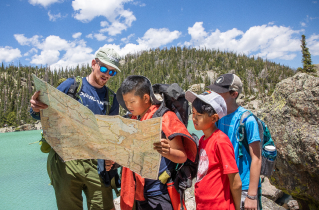
We'll spend the first four days on day hikes in Rocky Mountain National Park, averaging around five to seven miles, which will allow us to acclimate to the elevation and prepare ourselves for the more challenging hiking to come. We’ll hike to beautiful viewpoints each day and eat lunch along the trail. Our base camp will be in a frontcountry campground within Rocky Mountain National Park where we will be easily able to venture back into Estes Park to restock on food supplies if necessary.

Days 6-8: Backcountry Trip

We’ll then head out on a three-day backcountry trip where we'll hike below snowy mountains and along alpine lakes as well as camp in the beautiful and remote Colorado backcountry. Averaging five miles per day on the trail, we’ll carry all of our gear, learn about Leave No Trace principles and work together to enhance our backpacking skills. We'll spend two nights camping near one of Colorado's beautiful high mountain lakes. Our second day in the backcountry will be spent exploring the area and relaxing in our beautiful and peaceful setting.

Days 9 & 10: White Water Rafting

We’ll take a break from our hiking summer adventures to raft the Arkansas River with Wilderness Aware. Wilderness Aware has been guiding rafting trips for many years and rafting is often a highlight for Overland groups. Our experienced guides will take us down the river as we paddle in rafts through calm flat water and exciting Class II and III rapids. We’ll spend the night on the river, waking up to breakfast prepared by our guides as we get ready for our second day of paddling.

Day 11: Summiting a 14er - Mt. Yale

As a culmination of our two weeks of exploration in the Rockies, we’ll attempt to summit one of Colorado’s 14,000 foot peaks - Mount Yale. Colorado is famous for its 14ers and after our two weeks of hiking and rafting at high elevations, we'll be prepared to tackle one of these magnificent peaks. Rising early, we’ll hope to summit by late morning and return to camp in early afternoon—a triumphant and fitting end to our adventures in the Rockies.

Days 12 & 13: Trip End

At trip's end, we'll head back to Denver for a final dinner as we reminisce about our two weeks together and celebrate all that we have accomplished on Rocky Mountain Explorer.

“Ben spent two amazing weeks hiking in Colorado. He was able to spread his wings and let his personality shine with a small group of people. Ben came home and immediately said next summer he would like to go on another Overland adventure!" Vivian Keller, McLean, Virginia

Accommodations

All nights spent camping in tents

  • 8 nights of frontcountry camping. 5 are at an established campground in Rocky Mountain National Park with hot water sinks and flush toilets. Groups have access to showers and laundry in the nearby town of Estes Park. At least 1 night is spent at an established campground near Mount Yale with an outhouse and at least one other is spent at a campground in Buena Vista with flush toilets, hot showers, and laundry. The number of nights at each campground depends on section. The final night of the program is at a campground outside Denver with flush toilets, showers, and laundry available.
  • 3 nights of backcountry camping. 2 nights are at backcountry sites with no bathroom amenities and 1 night is along the Arkansas River with professional river guides.

Click thumbnails below to enlarge

Preparing For The Hiking

Your trip will be significantly more enjoyable if you have a basic level of fitness and well-broken-in boots. We cannot overemphasize the importance of well-broken-in boots. There have been students who have had to leave their trips because of blisters from boots that were not well broken in. The training table below is designed to help you properly break in your boots and develop a solid fitness base.

Pre-Trip Training

Four weeks before your trip: Wear your boots for 15-30 minutes a day to walk around your house or neighborhood so your boots will begin to conform to your feet.

Three weeks before your trip: Take three 30-minute hikes or walks in your boots.

Two weeks before your trip: Take three 45-minute hikes or walks in your boots.

One week before your trip start: Take three 1-hour hikes or walks in your boots.

Packing For Your Trip

  • Please do not bring cotton clothing to wear while hiking and camping. Cotton absorbs moisture and does not dry out quickly, keeping you cold and wet for longer. You will be more comfortable in synthetic (polyester, fleece, wool, etc.) clothes.
  • Label the following items with your name, address and phone number.
  • Bring only what you need and pack everything in your backpack or daypack. Participants can bring one additional set of travel clothes (e.g. jeans and a t-shirt) to wear on the plane. These will be left in the van.
  • If you are flying to your trip start, you should wear your hiking boots on the plane and carry your sleeping bag and sleeping pad on the plane with you in case your checked luggage fails to arrive on time.
  • You will have the chance to do laundry periodically and you will be able to leave some extra items in our van while we are on the trail, so please stick to the packing list and bring only the clothes and items listed below.
  • Overland will rent or provide any specialized gear for any of our non-hiking activities (for example, rock climbing, rafting, mountaineering, or kayaking) and that gear is included in your trip fee.
  • Check out some of our favorite brands and retailers to purchase items on this list.
  • Please do not bring any type of knife or multi-tool like a Swiss Army knife or Leatherman tool.
  • If you have any questions, please contact our office at 413-458-9672.

Clothing

  • Fleece Jacket or Pullover & Long Synthetic (No Cotton) Pants
    The fleece should be medium to heavy weight and reasonably compact. Please don't bring jeans or sweatpants.

  • Synthetic Long Underwear Top & Bottom
    One or two tops and one bottom.

  • Winter Hat & Gloves/Mittens
    For cool nights in camp.
  • Insulated vest
    An insulated fleece, Thinsulate or down vest.
  • Waterproof Rain Jacket and Rain Pants
    Your rain gear must be waterproof (not just water resistant). Gore-Tex is one of the better-known waterproof, breathable fabric brands, but there are many to choose from. Ponchos are not acceptable.

  • Hiking Shorts
    Two or three pairs of synthetic (not cotton) shorts. Athletic shorts or hiking shorts work well.

  • T-Shirts
    Three synthetic t-shirts

  • Underwear
    Five pairs

  • Socks
    Three pairs of thick wool or synthetic socks made for hiking. Sock liners are optional.
  • Sport Sandals
    These must have a heel strap for kayaking, swimming and around camp. Flip-flops or Crocs are not acceptable for water activities such as rafting or kayaking.
  • Sneakers or Tennis Shoes
    A comfortable and lightweight alternative to your hiking boots. To be used on short day hikes and in camp when your hiking boots are not necessary.
  • Pajamas
    Optional

  • Bathing Suit
    One

Hiking & Camping Equipment

  • Hiking Boots
    Waterproof hiking boots that are mid to high cut (recommended price range $100 to $175). Choose a comfortable boot that is designed for hiking with a medium weight pack.

  • Backpack
    2,500-3,600 cubic inches. Before you purchase a backpack, find your backpack size by measuring your torso length and your hips. We recommend getting fitted at a store where you can try on a number of different packs. 

  • Waterproof Pack Cover
    If your backpack does not come with a cover, choose one that fits your pack well.

  • Day Pack
    Your day pack can be used as a carry-on for your flight and will be necessary for day hikes. This can be a very basic backpack, maybe even just your school backpack. You should be able to carry it over both shoulders (i.e., NOT a satchel) and it should be big enough to hold your lunch, 2 water bottles, snacks and some extra warm layers and rain jacket. Please don't bring drawstring backpacks as they are uncomfortable for extended periods of use and do not have sufficient storage space.

  • Sleeping Bag and Stuff Sack
    We recommend a lightweight, compact sleeping bag (synthetic or down) that is rated to 20 degrees Fahrenheit or less. Your sleeping bag should compress into a stuff sack which can then be cinched down to 12-20” in length.

  • Sleeping Pad
    A full or ¾ length mattress pad that is inflatable or made of closed-cell foam. It should be compact enough to either fit in your pack or be strapped to the outside.

  • Bowl, Mug & Utensils
    For meals you will need a 6-8” plastic dish or bowl with a lid. The bowl can be a rigid Tupperware-like material or collapsible. A spoon is all you need but you can bring a spork or a set of lightweight silverware if you’d like. We also recommend a plastic insulated mug to be used for hot drinks.
  • Water Bottle
    One 1-liter Nalgene (or similar) water bottle. Overland will provide you with a second water bottle on arrival. A Camelbak or similar water bladder is acceptable.

  • Headlamp & Extra Batteries
    A small flashlight is OK but headlamps are great because your hands are freed up for other tasks. Rocky Mountain Explorer students must have a headlamp for their summit climb.

Miscellaneous Gear

  • Towel
    Medium size synthetic camping towel. Synthetic towls dry faster, are lightweight and more compactable than cotton.

  • Plastic Bags
    Ten large 1-gallon ziplock bags and four large trash bags. The ziplock bags are used to organize and waterproof your gear and small items. The trash bags are used to line your pack and to wrap your sleeping bag and pad.

  • Toiletries
    All items should be travel size. If necessary, you will be able to restock en route.

  • Moleskin or Molefoam
    One full package for blister protection.

  • Sunglasses & Hat with Visor
  • Sunscreen (SPF 15+) & Chapstick (with SPF protection)
    Please bring ample amounts of sunscreen

  • Insect Repellent
    Please bring ample amounts of bug spray

  • Personal Journal or Book
    Optional
  • Digital Camera & Extra Batteries
    Optional, but great for documenting the trip. Make sure you bring a large enough memory card (1 to 4 GB).
  • Spending Money
    $25/week in cash or with a debit or ATM card

Cell Phones, Electronics and Personal Property

Please note the following important policies:

Our programs offer the opportunity to strengthen independence and self-reliance. To maximize these benefits, we do not permit phone calls to or from our students (except in the case of emergency).

If it is important for your son or daughter to be able to call you while en route to Overland, we recommend that you purchase an inexpensive prepaid cell phone. Please do not send an expensive smart phone like an iPhone or BlackBerry. On arrival we will collect all phones but we have found that safeguarding these phones is problematic given that our programs move from place to place. Despite our best efforts over $25,000 in phones have been lost, damaged or stolen in the last two years alone. We regret that due to the expense involved in replacing these items, we take absolutely no responsibility whatsoever for phones, electronics or personal property brought by students and we will not make any reimbursements for lost, damaged or stolen phones, electronics or personal property.

Communications

  • To maximize independence and self-reliance, we do not permit phone calls, emails or text messages to or from our students (except in the case of an emergency).
  • Your child will call home with our phones and assistance on arrival and departure if he/she flies to his/her program.
  • In the case of an emergency, we will make sure you are in touch with your child as soon as possible.

 Cell Phones

  • Cell phone use is prohibited on all Overland programs.
  • Any phone brought by a student will be collected by us on arrival and returned at departure.
  • If you decide to bring a phone, do not bring an expensive smartphone (e.g., iPhone or BlackBerry); instead bring an inexpensive prepaid cell phone.

Personal Electronics

  • We do not permit personal electronics (e.g., iPods, Kindles or iPads) except for digital cameras.
  • We do not permit emergency response or GPS tracking electronics.
  • Any electronics brought by a student will be collected by us on arrival and mailed home or returned at departure.

Personal Property

  • Overland is not responsible for any student’s personal property—including but not limited to: phones, electronics, cameras, equipment, bicycles and clothing. Please schedule all expensive items on your homeowners insurance policy to ensure that your child/ward’s personal property and equipment is covered against loss, damage or theft.

No Reimbursements for Lost, Damaged or Stolen Phone, Electronics and Personal Property

  • Despite taking precautions, some phones, electronics and personal property brought by students (and collected by us) have been lost, damaged or stolen. We regret that due to the expense involved in replacing these items, we take absolutely no responsibility whatsoever for phones, electronics or personal property brought by students and we will not make any reimbursements for lost, damaged or stolen phones, electronics or personal property.
  • Please leave all valuable items - for example, jewelry or an important keepsake - at home while traveling with Overland. 

Questions or concerns? Please call us. Your understanding and cooperation are appreciated.

FAQs

What is the altitude like?

Most of the hiking we do will be between 8,000 to 10,000 feet. It takes a few days to get used to the elevation which is why we will start with four day hikes carrying just day packs (lunch, water, snacks an extra layer, rain gear, sunscreen, etc.) before our three-day backcountry where we will be carrying our full packs. Leaders will also be sure that students are drinking plenty of fluids and wearing sunscreen to prevent dehydration, altitude sickness and sunburn.

What are the day hikes like?

Most groups will aim to get up fairly early in the morning—it is best to be on the trail by 9 am in order to get a good hike in and get back to camp before the afternoon thunder showers roll in. Day hikes will vary in length from four to ten miles—some will be out to remote mountain lakes while a challenge hike might be to the top of a peak. The group’s ability and input will help the leaders decide which hikes are appropriate. The group will usually eat lunch at their destination and then head back to camp arriving in the middle of the afternoon. Students will then have a chance to play games and relax, or the group will head into town to shop for food.

What is the backcountry hike like?

The backcountry hike is three days and two nights and serves as an introduction to the backcountry. Students will load up their packs, and the group will hike four to five miles in to a remote lake. The group will then set up camp and spend two nights at the same campsite. The following day is a chance to explore the area with daypacks, hiking a peak or continuing up the valley. On the third morning, the group will pack up and head back out to their van.

What is the rafting like?

The group will spend two days and one night on the Arkansas River with Wilderness Aware. Their professional and experienced guides will lead our group on a trip comprised of some gentle whitewater, some more exciting Class II and Class III rapids and a night spent out on a beach on the river. There are a couple individual Class IV rapids.

How hard is the 14er?

Hiking the 14er is the most challenging aspect of the trip, but after all of the hiking and two weeks spent acclimatizing, it is a manageable challenge and is a fantastic way to finish our two weeks in the Rockies. The group will get up early; they are usually on the trail by 4am or 5am and reach the summit by about 10am. After a snack and photos, the group will begin the hike down arriving back in camp in the early afternoon.

How is Rocky Mountain Explorer similar to and different from other hiking trips?

Rocky Mountain Explorer is a bit more difficult than New England Explorer and Blue Ridge Explorer due to the altitude and dry climate. All of the hikes on Rocky Mountain Explorer are above 8,000 feet. It also has a two-day rafting trip, and the challenge hike is to the top of a 14er. It is similar to New England Explorer and Blue Ridge Explorer in that it is two weeks long and designed as an introductory trip. It is slightly easier than Northwest Explorer because there is a shorter backcountry, and it is only two weeks in length. Rocky Mountain Explorer is also similar in difficulty to Language & Hiking France 3-week in that both programs get out on trails everyday, and the hikes become more difficult throughout the length of the trip. Language & Hiking France does not have a backcountry camping section, but there are several frontcountry camping excursions on weekends. 

Prepare & Pack

Preparing For The Hiking

Your trip will be significantly more enjoyable if you have a basic level of fitness and well-broken-in boots. We cannot overemphasize the importance of well-broken-in boots. There have been students who have had to leave their trips because of blisters from boots that were not well broken in. The training table below is designed to help you properly break in your boots and develop a solid fitness base.

Pre-Trip Training

Four weeks before your trip: Wear your boots for 15-30 minutes a day to walk around your house or neighborhood so your boots will begin to conform to your feet.

Three weeks before your trip: Take three 30-minute hikes or walks in your boots.

Two weeks before your trip: Take three 45-minute hikes or walks in your boots.

One week before your trip start: Take three 1-hour hikes or walks in your boots.

Packing For Your Trip

  • Please do not bring cotton clothing to wear while hiking and camping. Cotton absorbs moisture and does not dry out quickly, keeping you cold and wet for longer. You will be more comfortable in synthetic (polyester, fleece, wool, etc.) clothes.
  • Label the following items with your name, address and phone number.
  • Bring only what you need and pack everything in your backpack or daypack. Participants can bring one additional set of travel clothes (e.g. jeans and a t-shirt) to wear on the plane. These will be left in the van.
  • If you are flying to your trip start, you should wear your hiking boots on the plane and carry your sleeping bag and sleeping pad on the plane with you in case your checked luggage fails to arrive on time.
  • You will have the chance to do laundry periodically and you will be able to leave some extra items in our van while we are on the trail, so please stick to the packing list and bring only the clothes and items listed below.
  • Overland will rent or provide any specialized gear for any of our non-hiking activities (for example, rock climbing, rafting, mountaineering, or kayaking) and that gear is included in your trip fee.
  • Check out some of our favorite brands and retailers to purchase items on this list.
  • Please do not bring any type of knife or multi-tool like a Swiss Army knife or Leatherman tool.
  • If you have any questions, please contact our office at 413-458-9672.

Clothing

  • Fleece Jacket or Pullover & Long Synthetic (No Cotton) Pants
    The fleece should be medium to heavy weight and reasonably compact. Please don't bring jeans or sweatpants.

  • Synthetic Long Underwear Top & Bottom
    One or two tops and one bottom.

  • Winter Hat & Gloves/Mittens
    For cool nights in camp.
  • Insulated vest
    An insulated fleece, Thinsulate or down vest.
  • Waterproof Rain Jacket and Rain Pants
    Your rain gear must be waterproof (not just water resistant). Gore-Tex is one of the better-known waterproof, breathable fabric brands, but there are many to choose from. Ponchos are not acceptable.

  • Hiking Shorts
    Two or three pairs of synthetic (not cotton) shorts. Athletic shorts or hiking shorts work well.

  • T-Shirts
    Three synthetic t-shirts

  • Underwear
    Five pairs

  • Socks
    Three pairs of thick wool or synthetic socks made for hiking. Sock liners are optional.
  • Sport Sandals
    These must have a heel strap for kayaking, swimming and around camp. Flip-flops or Crocs are not acceptable for water activities such as rafting or kayaking.
  • Sneakers or Tennis Shoes
    A comfortable and lightweight alternative to your hiking boots. To be used on short day hikes and in camp when your hiking boots are not necessary.
  • Pajamas
    Optional

  • Bathing Suit
    One

Hiking & Camping Equipment

  • Hiking Boots
    Waterproof hiking boots that are mid to high cut (recommended price range $100 to $175). Choose a comfortable boot that is designed for hiking with a medium weight pack.

  • Backpack
    2,500-3,600 cubic inches. Before you purchase a backpack, find your backpack size by measuring your torso length and your hips. We recommend getting fitted at a store where you can try on a number of different packs. 

  • Waterproof Pack Cover
    If your backpack does not come with a cover, choose one that fits your pack well.

  • Day Pack
    Your day pack can be used as a carry-on for your flight and will be necessary for day hikes. This can be a very basic backpack, maybe even just your school backpack. You should be able to carry it over both shoulders (i.e., NOT a satchel) and it should be big enough to hold your lunch, 2 water bottles, snacks and some extra warm layers and rain jacket. Please don't bring drawstring backpacks as they are uncomfortable for extended periods of use and do not have sufficient storage space.

  • Sleeping Bag and Stuff Sack
    We recommend a lightweight, compact sleeping bag (synthetic or down) that is rated to 20 degrees Fahrenheit or less. Your sleeping bag should compress into a stuff sack which can then be cinched down to 12-20” in length.

  • Sleeping Pad
    A full or ¾ length mattress pad that is inflatable or made of closed-cell foam. It should be compact enough to either fit in your pack or be strapped to the outside.

  • Bowl, Mug & Utensils
    For meals you will need a 6-8” plastic dish or bowl with a lid. The bowl can be a rigid Tupperware-like material or collapsible. A spoon is all you need but you can bring a spork or a set of lightweight silverware if you’d like. We also recommend a plastic insulated mug to be used for hot drinks.
  • Water Bottle
    One 1-liter Nalgene (or similar) water bottle. Overland will provide you with a second water bottle on arrival. A Camelbak or similar water bladder is acceptable.

  • Headlamp & Extra Batteries
    A small flashlight is OK but headlamps are great because your hands are freed up for other tasks. Rocky Mountain Explorer students must have a headlamp for their summit climb.

Miscellaneous Gear

  • Towel
    Medium size synthetic camping towel. Synthetic towls dry faster, are lightweight and more compactable than cotton.

  • Plastic Bags
    Ten large 1-gallon ziplock bags and four large trash bags. The ziplock bags are used to organize and waterproof your gear and small items. The trash bags are used to line your pack and to wrap your sleeping bag and pad.

  • Toiletries
    All items should be travel size. If necessary, you will be able to restock en route.

  • Moleskin or Molefoam
    One full package for blister protection.

  • Sunglasses & Hat with Visor
  • Sunscreen (SPF 15+) & Chapstick (with SPF protection)
    Please bring ample amounts of sunscreen

  • Insect Repellent
    Please bring ample amounts of bug spray

  • Personal Journal or Book
    Optional
  • Digital Camera & Extra Batteries
    Optional, but great for documenting the trip. Make sure you bring a large enough memory card (1 to 4 GB).
  • Spending Money
    $25/week in cash or with a debit or ATM card

Cell Phones, Electronics and Personal Property

Please note the following important policies:

Our programs offer the opportunity to strengthen independence and self-reliance. To maximize these benefits, we do not permit phone calls to or from our students (except in the case of emergency).

If it is important for your son or daughter to be able to call you while en route to Overland, we recommend that you purchase an inexpensive prepaid cell phone. Please do not send an expensive smart phone like an iPhone or BlackBerry. On arrival we will collect all phones but we have found that safeguarding these phones is problematic given that our programs move from place to place. Despite our best efforts over $25,000 in phones have been lost, damaged or stolen in the last two years alone. We regret that due to the expense involved in replacing these items, we take absolutely no responsibility whatsoever for phones, electronics or personal property brought by students and we will not make any reimbursements for lost, damaged or stolen phones, electronics or personal property.

Communications

  • To maximize independence and self-reliance, we do not permit phone calls, emails or text messages to or from our students (except in the case of an emergency).
  • Your child will call home with our phones and assistance on arrival and departure if he/she flies to his/her program.
  • In the case of an emergency, we will make sure you are in touch with your child as soon as possible.

 Cell Phones

  • Cell phone use is prohibited on all Overland programs.
  • Any phone brought by a student will be collected by us on arrival and returned at departure.
  • If you decide to bring a phone, do not bring an expensive smartphone (e.g., iPhone or BlackBerry); instead bring an inexpensive prepaid cell phone.

Personal Electronics

  • We do not permit personal electronics (e.g., iPods, Kindles or iPads) except for digital cameras.
  • We do not permit emergency response or GPS tracking electronics.
  • Any electronics brought by a student will be collected by us on arrival and mailed home or returned at departure.

Personal Property

  • Overland is not responsible for any student’s personal property—including but not limited to: phones, electronics, cameras, equipment, bicycles and clothing. Please schedule all expensive items on your homeowners insurance policy to ensure that your child/ward’s personal property and equipment is covered against loss, damage or theft.

No Reimbursements for Lost, Damaged or Stolen Phone, Electronics and Personal Property

  • Despite taking precautions, some phones, electronics and personal property brought by students (and collected by us) have been lost, damaged or stolen. We regret that due to the expense involved in replacing these items, we take absolutely no responsibility whatsoever for phones, electronics or personal property brought by students and we will not make any reimbursements for lost, damaged or stolen phones, electronics or personal property.
  • Please leave all valuable items - for example, jewelry or an important keepsake - at home while traveling with Overland. 

Questions or concerns? Please call us. Your understanding and cooperation are appreciated.

Travel Information

Families are responsible for making travel arrangements to and from Denver, Colorado. Overland’s leaders will be on hand at the airport to provide supervision and assistance at trip start and end.

If your child is flying:

Flight Arrival Window:
Denver International Airport (DEN) between 10:00 a.m. and 12:00 noon Sunday

Flight Departure Window:
Denver International Airport (DEN) between 8:00 a.m. and 12:00 noon Friday

If you're dropping off and/or picking up your child:

Trip Start Drop Off:
Denver International Airport (DEN) at 11:00 on Sunday in the center of the terminal on Level 5 near where domestic arrivals come up the escalators (in the direct center of the map here in between the two green lines).

Trip End Pick Up:
Denver International Airport (DEN) United Check-In Area (West Terminal) at 9:00 a.m. on Friday.

Any other special cases, please call Overland to coordinate, if you have not done so already.

Flight & Travel Information

Mail Stops

More detailed information about sending mail to your student will be posted on the Overland Portal in May.

Helpful Reminders

Help Your Child Prepare Adequately

Once your child is enrolled you will be directed to the Overland Portal. Please take the time to read through all of the pre-trip information and prepare appropriately. All programs—not just our outdoor trips—require thoughtful preparation and good fitness. It is important to stay active and fit through sports and exercise. In addition, hikers need broken in boots and bikers need to practice safe riding.

Summer Photos

We will upload photos of every group during the summer. Details will be provided in the spring. We’ll also upload all the leaders’ photos from the summer by mid-August (which you can download for free).

We're Here for You

Once our programs start the Overland office is open seven days a week from 8am to 11pm. After 11pm, for all routine calls, please leave a voicemail, and we will call you back as soon as we return to the office. In an emergency, follow the instructions on the answering machine to contact our answering service, and we will return your call promptly.

Expectations, Cell Phones & Electronics

EXPECTATIONS & RULES

Overland programs are wholesome, structured experiences with high expectations of each student’s behavior. Our students are expected to be enthusiastic, positive, helpful and supportive of each other and of their leaders; they are expected to have chosen an appropriate trip for their interests and abilities; they are expected to have prepared adequately so that they can keep up physically and participate in all of the group’s activities; they understand that smoking, using any tobacco product, drinking alcohol or using any drugs (other than prescribed medications) is strictly prohibited. We reserve the right to dismiss any student for any reason whatsoever-- including but not limited to: rule breaking, a poor attitude, misbehaving, an inability to fully participate or to keep up physically. Students who are dismissed receive no refund and all costs associated with the dismissal are the sole responsibility of the parents/guardians.

PHONE CALLS, CELL PHONES AND ELECTRONICS

To maximize independence and self-reliance, we do not permit phone calls, emails or text messages to or from our students; the exceptions to this are: (1) your child will call home on arrival and departure with our phones and assistance and (2) in the case of an emergency. If your child brings a phone for use while en route to his/her Overland program, please do not bring an expensive smart phone; instead bring an inexpensive prepaid cell phone or calling card. Please do not bring personal electronics (e.g., iPods, Kindles, iPads, GPS or similar devices) except for digital cameras. Any cell phones or electronics (except cameras) brought by a student will be collected on arrival and mailed home or returned at departure.


Leader Profile

Chris Greeno

Chris Greeno

Hometown
Edina, Minnesota,
School
Williams College
Leadership
Cape Cod & the Islands
More about Chris »

See More Overland Leaders

American Camp Accreditation Logo


MA Education Web Design Copyright 2013 Overland All rights reserved