Overland SUMMER PROGRAMS FOR 4TH - 12TH GRADERS

European Explorer

4 weeks open to grades 9-12

Overview

Explore Europe’s magnificent mountain valleys and stunning passes while backpacking parts of two world-famous hiking routes: the GR 11, a mountain trek from the Atlantic to the Mediterranean, and the Tour Mont Blanc, a demanding circuit around Mont Blanc, the highest mountain in western Europe.

We’ll meet in Barcelona where we’ll enjoy a walk in town before we head to the rugged and timeless Pyrenees for an extended backcountry hike on a section of the GR 11. We’ll backpack over spectacular mountain passes and through small villages along trails established by shepherds centuries ago. After our hike, we’ll return to Barcelona for a relaxing day at the beach and a celebratory tapas dinner out on the town.

The next leg of our month together will take us to the French Alps, where we’ll hike a segment of one of the world’s premier mountain routes, the Tour Mont Blanc. From Chamonix, we’ll make our way around Mont Blanc for 12 days, hiking through three countries—France, Italy and Switzerland. The hike is demanding, with an average of eight miles per day over challenging terrain, but the rewards are many, as we’ll hike through a spectacular land of deep green valleys and giant snowcapped mountains. At trip’s end, we’ll look back on having hiked in two of the world’s most beautiful mountain settings while enjoying the camaraderie and fun of an adventurous Overland group.

 "I traveled abroad, met amazing people from different places and climbed challenging mountains. Thank you for an awesome summer." Tina Hirt, Fort Worth, Texas

Highlights

  • Backpack Spain’s Pyrenees
  • Swim in the Mediterranean
  • Backpack the Tour Mont Blanc in France, Italy & Switzerland
  • Visit Barcelona & Chamonix

Grade

For students who will finish grades 9-12 in June 2012.

Multiple sections are grouped by grades.

Call us (413-458-9672) to check on current availability.

Challenge Level

8 (1-10, 1 is easiest)

Start and End Location

Starts in Barcelona, Spain.

Ends in Geneva, Switzerland.

Accommodations

Two or three nights at hostels in Barcelona and Geneva (depends on the section).

On the GR - 11:

Two nights of frontcountry camping, one before and one after the hike. These are campgrounds with showers and laundry facilities.

Two nights in alpine huts. Staying in alpine huts is part of the experience of hiking in Europe and a great way to meet hikers from all over the world. Normally they consist of long rows of bunk beds with mattresses and pillows. Guests can either rent sheets (sometimes required) or use their sleeping bags. Most of these huts offer hot showers, dinners and breakfast.

Five nights of backcountry camping. Usually near lodges with access to bathrooms with flush toilets.

On the Tour Mont Blanc:

Seven nights of frontcountry camping. Campgrounds with showers and, in some cases, laundry facilities. Three of these nights are before completing the hike and one is after.

Four nights of backcountry camping. Usually, but not always, near lodges with access to bathrooms.

Two nights in alpine huts.

Dates and Fees

4 Weeks

Sunday, June 24 to Saturday, July 21

$5695 (airfare not included)

". . . a wonderful challenging program that gave Abby a true sense of accomplishment." Ellen Smithberg, Chappaqua, New York

Itinerary

Trip Start

We'll meet in Barcelona for a quick introduction to Spain and Catalan culture. After an afternoon walk and some last minute preparations for our first hike, we'll get a good night's sleep before travelling to the Pyrenees the next morning.

The Pyrenees of Spain

Starting in the quaint mountain town of Espot, our eight-day backcountry hike through the Pyrenees will take us over spectacular mountain passes and through small villages along ancient trails. We'll average five miles a day over challenging terrain including demanding climbs and slow descents. Some nights will be spent camping in the backcountry; other nights we’ll stay in traditional mountain huts, opening a window for us into Spanish life and culture. Our last day on the trail will take us to the charming town of Benasque, surrounded by the Pyrenees' highest peaks.

 Swimming in the Mediterranean

After backpacking the Pyrenees, we’ll head back to Barcelona for a day to explore the archicture and beaches for which this city is famous. We'll enjoy a walk down the famous Ramblas and allow our feet to soak in the azure waters of the Mediterranean before boarding our train for the Alps!

The Tour Mont Blanc

Leaving Spain, we'll head to Chamonix in the heart of the French Alps. The following day we'll begin our hike along the world-famous Tour Mont Blanc. The next 13 days will take us through France, Italy, and Switzerland, over Alpine Passes, and through charming villages. Our days will be challenging, as we average nine miles per day. We will spend our nights camping in both the remote Alpine backcountry and alongside quaint Alpine huts. At the end of our hike, we will have travelled through three countries and completed an almost-complete 360 degree loop around the highest peak in Western Europe, the towering 15,771 foot Mont Blanc!

Trip End

From the heart of the mountains, we’ll train to Geneva and celebrate all that we've achieved together during our month of hiking and summer adventure on European Explorer!

"Completing the Tour du Mont Blanc was the greatest accomplishment of my life!" Abby Margolis, Chappaqua, New York

Trip Details

What's it like?

Here's how a former Overland leader described the hiking on European Explorer:

"Hiking in Europe is different from hiking in the U.S. In the U.S., there are hikes that can take you in to the backcountry for days with little to no contact with others. Not so in Europe. You will hike through beautiful mountain areas and small Alpine villages everyday. You will hike on mountain trails, dirt roads and paved roads. While there is less solitude than in the U.S., there is far more in the way of culture and opportunities to experience Alpine life.

“Matt returned home with a glow and a skip in his step.  He was so happy.” Kathryn Smerling, New York, New York

Photos

Click thumbnails below to enlarge

Before You Go

Enrollment Forms

Enrollment Forms 2012


Prepare & Pack

Preparing For The Hiking

Your trip will be significantly more enjoyable if you have a good level of fitness and well-broken-in boots. We cannot overemphasize the importance of well-broken-in boots. There have been students who have had to leave their trips because of blisters from boots that were not well broken in. The training table below is designed to help you properly break in your boots and develop a solid fitness base.

Pre-Trip Training

Five weeks before your trip: Wear your boots for 15-30 minutes a day to walk around your house or neighborhood so your boots will begin to conform to your feet.

Four weeks before your trip: Take three 30-minute hikes or walks in your boots.

Three weeks before your trip: Take three 60-minute hikes or walks in your boots.

Two weeks before your trip: Take three 1-hour hikes or walks in your boots with a backpack loaded with 10% of your body weight.

One week before your trip start: Take two 2-hour hikes or walks in your boots with a backpack loaded with 15-20% of your body weight.

Trip Difficulty

Participants must be prepared for long days on the trail hiking with full backpacks. Groups wake early, hit the trail right after breakfast and hike with breaks until at least mid-afternoon. The terrain is challenging—with long, steep uphill sections, rocky descents and possibly some hiking on snow (depending on the trip) and inclement weather can add a further challenge. Experience among participants will vary but no previous hiking or backpacking experience is required.

Packing For Your Trip

  • Label the following items with your name, address and phone number.
  • Bring only what you need and pack everything in your backpack or daypack. Alpine Challenge and European Explorer students should not bring a day pack since they will be carrying everything in their large backpacks during the entire trip.
  • Participants on High Sierra Explorer, Teton Challenge and Colorado 14er Challenge can bring one additional set of travel clothes (e.g. jeans and a t-shirt) to wear on the plane. These will be left in the van.
  • If you are flying to your trip start, you should wear your hiking boots on the plane and carry your sleeping bag and sleeping pad on the plane with you in case your checked luggage fails to arrive on time.
  • You will have the chance to do laundry periodically so please stick to the packing list and bring only the clothes and items listed below.
  • Overland will rent or provide any specialized gear for any of our non-hiking activities (for example, rock climbing, rafting, mountaineering, or kayaking) and that gear is included in your trip fee.
  • Check out some of our favorite brands and retailers to purchase items on this list.
  • Please do not bring any type of knife or multi-tool like a Swiss Army knife or Leatherman tool.
  • If you have any questions, please contact our office at 413-458-9672.

Clothing

  • Fleece Jacket or Pullover & Long Fleece Pants
    The fleece should be medium to heavy weight and reasonably compact. Please don't bring jeans or sweatpants.

  • Synthetic Long Underwear Top & Bottom
     Two or three tops and one bottom.
  • Winter Hat & Gloves/Mittens
    For cool nights in camp. High Sierra Explorer students should bring a second pair of warm waterproof gloves for climbing on snow and ice.

  • Insulated vest
    An insulated fleece, Thinsulate or down vest. High Sierra Explorer students should instead bring a lightweight and compressible down jacket.
  • Waterproof Rain Jacket and Rain Pants
    Your rain gear must be waterproof (not just water resistant). Gore-Tex is one of the better-known waterproof, breathable fabric brands, but there are many to choose from. Ponchos are not acceptable.

  • Hiking Shorts or Pants
    Two or three pairs. Synthetic only, not cotton. Instead of shorts and gaiters, you may choose to wear pants while hiking to keep mud, water and snow off your legs and boots.

  • T-Shirts
    Three synthetic t-shirts.

  • Underwear
    Five pairs.

  • Socks
    Four pairs of thick wool or synthetic socks made for hiking. Sock liners are optional.
  • Sport Sandals
    These must have a heel strap if the trip has kayaking or rafting (flip-flops or Crocs are not acceptable). Crocs or flip-flops are fine for Alpine Challenge or European Explorer.
  • Sneakers or Tennis Shoes
    A comfortable and lightweight alternative to your hiking boots. To be used on short day hikes and in camp when your hiking boots are not necessary. Sneakers are not allowed on Alpine Challenge or European Explorer.

  • Pajamas
    Optional.
  • Bathing Suit
    Optional.

Hiking & Camping Equipment

  • Hiking Boots
    Waterproof hiking boots that are mid to high cut (recommended price range $100 to $175). Choose a comfortable boot that is designed for hiking with a medium weight pack.

  • Backpack
    4,000-5,000 cubic inches. Before you purchase a backpack, find your backpack size by measuring your torso length and your hips. We recommend getting fitted at a store where you can try on a number of different packs. 
  • Waterproof Pack Cover
    If your backpack does not come with a cover, choose one that fits your pack well.
  • Day Pack
    Your day pack can be used as a carry-on for your flight and will be necessary for day hikes. This can be a very basic backpack, maybe even just your school backpack. You should be able to carry it over both shoulders (i.e., NOT a satchel) and it should be big enough to hold your lunch, 2 water bottles, snacks and some extra warm layers and rain jacket. Do not bring a day pack for Alpine Challenge or European Explorer.
  • Sleeping Bag and Stuff Sack
    We recommend a lightweight, compact sleeping bag (synthetic or down) that is rated to 20 degrees Fahrenheit or less. Your sleeping bag should compress into a stuff sack which can then be cinched down to 12-20” in length.
  • Sleeping Pad
    A full or ¾ length mattress pad that is inflatable or made of closed-cell foam. It should be compact enough to either fit in your pack or be strapped to the outside.
  • Bowl, Mug & Utensils
    For meals you will need a 6-8” plastic dish or bowl with a lid. The bowl can be a rigid Tupperware-like material or collapsible. A spoon is all you need but you can bring a spork or a set of lightweight silverware if you’d like. We also recommend a plastic insulated mug to be used for hot drinks.
  • Water Bottle
    One 1-liter Nalgene (or similar) water bottle. Overland will provide you with a second water bottle on arrival. A Camelbak or similar water bladder is acceptable. High Sierra Explorer students should know that water bladders are not recommend for the Shasta climb.
  • Headlamp & Extra Batteries
    A small flashlight is OK but headlamps are great because your hands are freed up for other tasks. A headlamp is required for High Sierra Explorer and Colorado 14er Challenge students.
  • Small Safety Whistle
    Plastic or metal with a string or lanyard attached. This is for safety reasons in case a student is separated from the group.
  • Telescoping Hiking Poles
    Optional. Hiking poles are great for stability while hiking, reducing strain on the knees and providing balance while crossing streams or on rough terrain. Recommended for Alpine Challenge and European Explorer.

  • Gaiters
    Optional. 
  • Mosquito Head Net
    Optional. Strongly advised for High Sierra Explorer and Teton Challenge.

Miscellaneous Gear

  • Towel
     Optional. Synthetic camping towel only.

  • Plastic Bags
    Ten large 1-gallon ziplock bags and four large trash bags. The ziplock bags are used to organize and waterproof your gear and small items. The trash bags are used to line your pack and to wrap your sleeping bag and pad.

  • Toiletries
    All items should be travel size. If necessary, you will be able to restock en route.

  • Moleskin or Molefoam
    One full package for blister protection.
  • Sunglasses & Hat with Visor
    High Sierra Explorer students should have sunglasses that wrap around to protect from the sun reflecting off of the snow and ice.
  • Sunscreen (SPF 15+) & Chapstick (with SPF protection)
    Please bring ample amounts of sunscreen.
  • Insect Repellent
    Please bring ample amounts of bug spray.
  • Personal Journal or Book
    Optional.
  • Digital Camera & Extra Batteries
    Great for documenting the trip. Make sure you bring a large enough memory card (1 to 4 GB).
  • Valid Passport
    For international trips only. However, all students who are flying home should have photo identification. Leave a photocopy of your passport at home just in case.

  • Spending Money
    $25/week in cash or with a debit or ATM card. Students on international programs should note the exchange rate.

Cell Phones, Electronics and Personal Property

Please note the following important policies:

Our programs offer the opportunity to strengthen independence and self-reliance. To maximize these benefits, we do not permit phone calls to or from our students (except in the case of emergency).

If it is important for your son or daughter to be able to call you while en route to Overland, we recommend that you purchase an inexpensive phone card that your son or daughter can use at any airport pay phone.

If you feel that it is necessary to send your son or daughter with a phone, please do not send an expensive smart phone like an iPhone or BlackBerry. Send an inexpensive prepaid cell phone instead. On arrival we will collect all phones but we have found that safeguarding these phones is problematic given that our programs move from place to place. Despite our best efforts over $25,000 in phones have been lost, damaged or stolen in the last two years alone. We regret that due to the expense involved in replacing these items, we take absolutely no responsibility whatsoever for phones, electronics or personal property brought by students and we will not make any reimbursements for lost, damaged or stolen phones, electronics or personal property.

Communications

  • To maximize independence and self-reliance, we do not permit phone calls, emails or text messages to or from our students (except in the case of an emergency).
  • Your child will call home with our phones and assistance on arrival and departure if he/she flies to his/her program.
  • In the case of an emergency, we will make sure you are in touch with your child as soon as possible.

 Cell Phones

  • Cell phone use is prohibited on all Overland programs.
  • Any phone brought by a student will be collected by us on arrival and returned at departure.
  • If you decide to bring a phone, do not bring an expensive smartphone (e.g., iPhone or BlackBerry); instead bring an inexpensive prepaid cell phone (better yet, bring an inexpensive prepaid calling card).

Personal Electronics

  • We do not permit personal electronics (e.g., iPods, Kindles or iPads) except for digital cameras.
  • We do not permit emergency response or GPS tracking electronics.
  • Any electronics brought by a student will be collected by us on arrival and mailed home or returned at departure.

Personal Property

  • Overland is not responsible for any student’s personal property—including but not limited to: phones, electronics, cameras, equipment, bicycles and clothing. Please schedule all expensive items on your homeowners insurance policy to ensure that your child/ward’s personal property and equipment is covered against loss, damage or theft.

No Reimbursements for Lost, Damaged or Stolen Phone, Electronics and Personal Property

  • Despite taking precautions, some phones, electronics and personal property brought by students (and collected by us) have been lost, damaged or stolen. We regret that due to the expense involved in replacing these items, we take absolutely no responsibility whatsoever for phones, electronics or personal property brought by students and we will not make any reimbursements for lost, damaged or stolen phones, electronics or personal property.

Questions or concerns? Please call us. Your understanding and cooperation are appreciated.


Travel Information

Families are responsible for making travel arrangements to Barcelona, Spain, and from Geneva, Switzerland. Overland’s leaders will be on hand at the airport to provide supervision and assistance at trip start and end.

DROP OFF: Barcelona Intl Airport (BCN) Terminal 1, 2nd floor International Arrivals "La Plaza" 10:00 a.m. Sunday
PICK UP: Geneva Intl Airport (GVA) Check-In Area 10:00 a.m. Saturday
FLIGHT ARRIVAL: Barcelona Intl Airport (BCN) between 8:00 a.m. and 11:00 a.m. Sunday*
FLIGHT DEPARTURE: Geneva Intl Airport (GVA) between 9:00 a.m. and 12:00 noon Saturday
*Please note: To arrive in Barcelona on Sunday morning, flights must depart from the U.S. on Saturday night. If possible, please choose a flight that does not connect in Europe (e.g., fly non-stop from a U.S. gateway).

Any other special cases, please call Overland to coordinate, if you have not done so already.

Flight & Travel Information 2012

Program Start & End Information 2012


Mail Stops

Please send Letters & Postcards (rather than care packages)

  • Since we’re on the move and prefer to travel light, we encourage you to send letters and postcards rather than care packages.

Specific Instructions For Letters

  • On all letters: Please write clearly, in bold print, “Please hold for Overland Group” on the front of the envelope.
  • Use United States Postal Service Air Mail only. Avoid express mail, DHL, FedEx, UPS or any other express mail service or courier.
  • Please do not send overnight letters: Many overnighted letters arrive before or after we arrive and are then sent back (for this same reason, please do not send mail that requires a signature upon delivery).
  • For sending mail internationally, please count on two weeks minimum.


European Explorer A

Mail Stop #1: We’ll pick up mail at the end of our hike in the Pyrenees (mail must arrive prior to July 6th). On the lower left hand corner of the envelope, please write “Para Grupo Overland Travel, 6 julio”. Please address mail as follows:

Student’s Name, Overland Group/EX A
c/o Barcelona Mar Hostel
Carrer Sant Pau 80
08001 Barcelona
SPAIN

Mail Stop #2: We’ll pick up mail during our Tour Mont Blanc (mail must arrive prior to July 15th). On the lower left hand corner of the envelope, please write “Poste restante pour groupe Overland Travel, 15 juillet”. Please address mail as follows:

Student’s Name, Overland Group/EX A
c/o Camping des Glaciers
1944 La Fouly
Switzerland

Mail Stop #3: We’ll pick up mail at the end of our Tour Mont Blanc in Chamonix (mail must arrive prior to July 21st). On the lower left hand corner of the envelope, write: “Poste restante pour groupe Overland Travel, 21 juillet”. Please address mail as follows:

Student’s Name, Overland Group/EX A
c/o Camping Les Marmottes
140 chemin des Doux - Les Bossons
74400 Chamonix-Mont-Blanc
FRANCE

Helpful Reminders

Checklist and Reminders 2011

Apply Now

HOW TO APPLY

You have two choices. You can apply online with a credit card by clicking the link below.

Apply Online

Or you can download the 2012 Overland Application as a PDF (you will need Adobe Acrobat Reader).

Then mail your completed one-page application and $795 deposit check to:

Overland
P.O. Box 31
Williamstown, MA 01267

For overnight mail via UPS or FedEx, please use our street address:

Overland
63 Spring Street
Williamstown, MA 01267

Applications are reviewed in the order in which they arrive at our office and we cannot hold spots over the phone.

Learn about our admissions process.

Leader Profile

Hannah Lafleur

Hannah Lafleur

Hometown
Westmoreland, New Hampshire
School
Colby College
Leadership
Alaska Explorer, Berkshire Adventure, European Explorer, New England Adventure, Northwest Explorer
More about Hannah »

See More Overland Leaders

Check out photos from European Explorer

Check out our photo gallery

Find us on Facebook   Smug Mug


Travel Abroad or Travel the US

New England | Western US | Alaska | Hawaii | Canada | Costa Rica | Virgin Islands | Peru | Ecuador | France | Spain | Europe | Tanzania | Thailand

Summer Programs

Overland Programs offers more than 40 different trips including New England summer camps and adventures for kids (4th graders, 5th graders and 6th graders), hiking trips for teens, teen bike trips in Europe and America, teen summer service programs, writing programs on the Williams college campus and field studies trips in the developing world. Overland has summer adventure trips and programs of all types, lengths, and locations. Our teen adventure travel trips and programs are for elementary school students, middle school students and high school students. We have wilderness adventures, bike adventures cross-country, and outdoor leadership programs spread across five continents. Overland is not simply a summer-long experience—it's a life experience with value and resonance that extends far beyond the boundaries of a single summer.
  

Elite Leaders

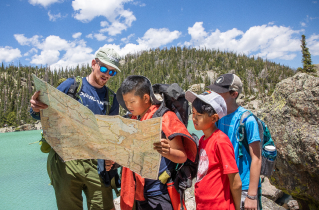
Bright, charismatic and accomplished, our leaders ensure the safety and well-being of every Overland student. We recruit our leaders from America's finest colleges and universities, meeting with hundreds of campus leaders across the the countryan effort that generates over 450 applications for just 80 new leadership positions. No other organization of our kind invests the resources that we do to put together the finest summer leadership staff possible.

Programs and Adventures Since 1984

American Camp Accreditation LogoOverland, also known as Overland Summers, Overland Programs, Overland Travel, and even as Overland Adventures, is proud to have ACA accredited summer programs which are held to the highest safety standards. Overland is not a teen tour or a typical summer camp, our trips and programs are carefully crafted and designed to challenge our students, who are always in small groups of no more than 12 students with superlative leadership.


MA Education Web Design Copyright 2012 Overland All rights reserved