Overland : summer & semester programs for 10-19 year olds

Alaska Explorer

3 weeks open to grades 8-12

Overview

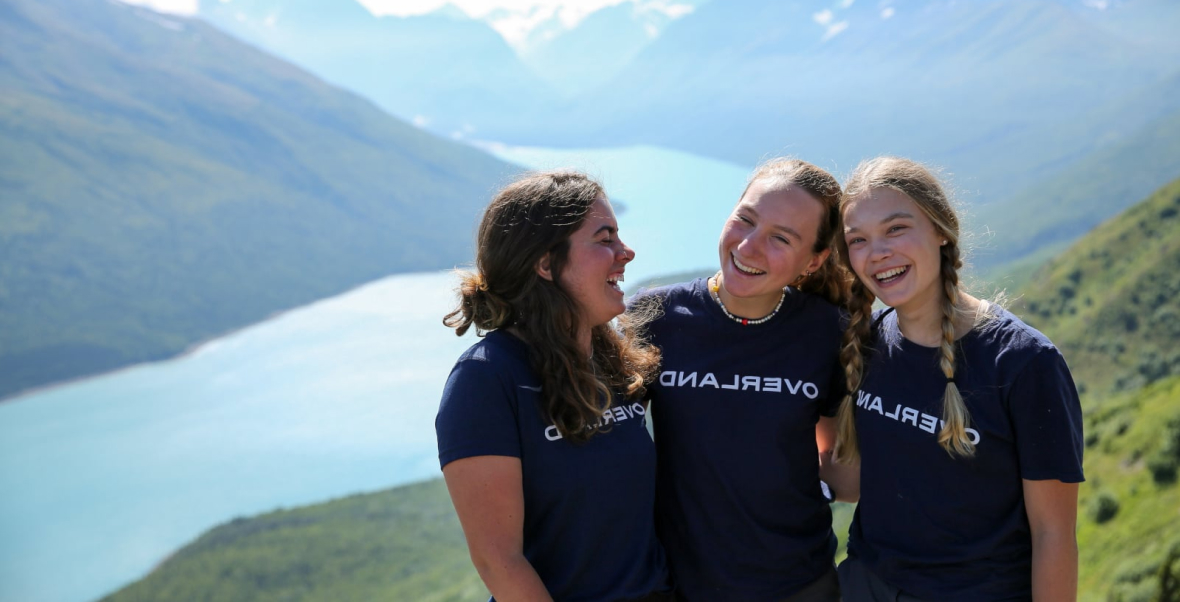
Alaska is unequaled in its vast wilderness and spectacular mountains, offering unsurpassed outdoor opportunities for the adventurous teenager. For three weeks, we’ll hike, raft and sea kayak the best of Alaska, discovering giant mountains, rushing rivers and rugged coastline teeming with diverse wildlife.

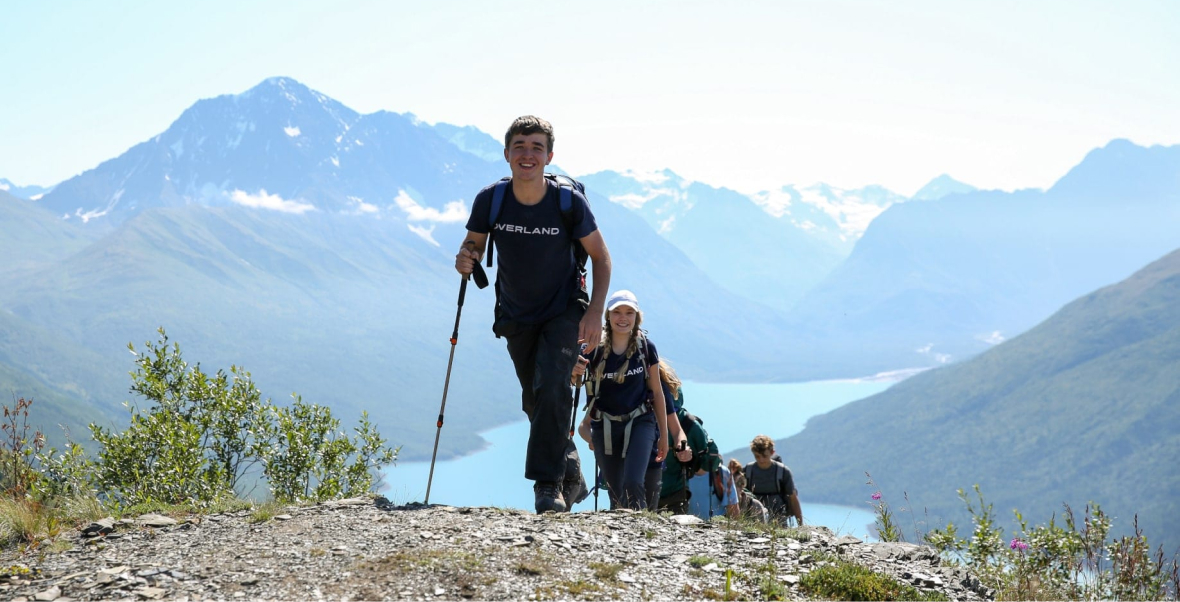
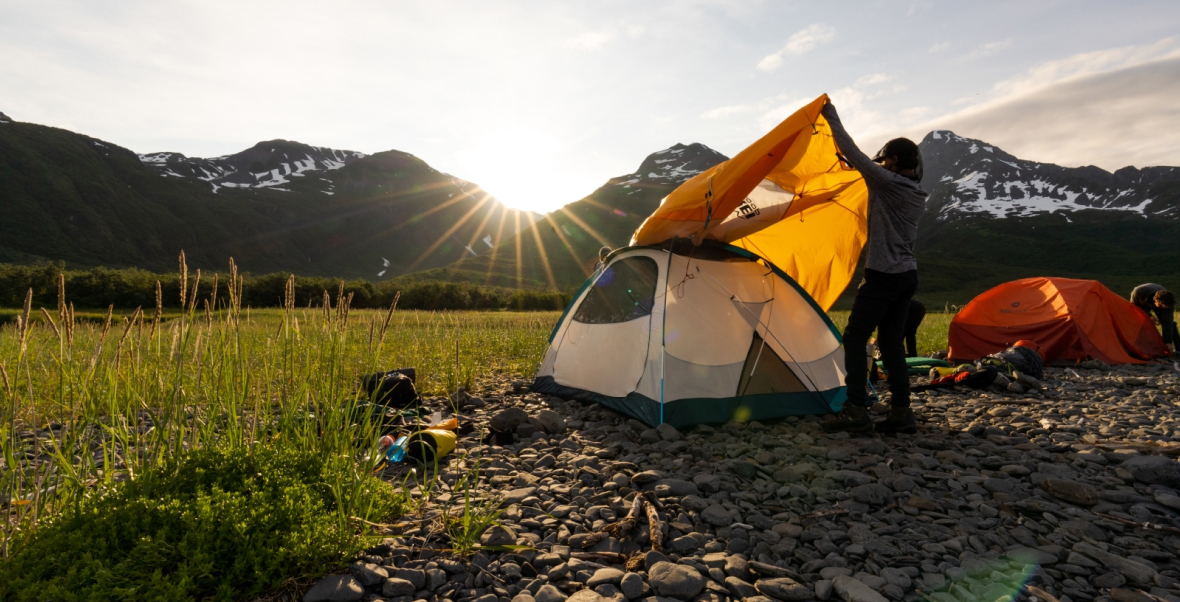
From Anchorage, we’ll head to the rugged Chugach Mountains for a four-day backcountry hike over mossy tundra and past glacial lakes. Climbing above treeline with views of snowcapped peaks, we’ll hike up the remote Indian Valley, over Ship Lake Pass and into the Williwaw Lakes Valley. Next, we’ll head to Denali State Park for a four-day ridge hike with views of Denali and the impressive Alaska Range. From here, we’ll head north for a hike in Denali National Park, where it’s not uncommon to see moose, caribou and bald eagles. We’ll then meet our rafting guides for two days of paddling on the beautiful Nenana River, through scenic flat water and exciting white water. The final leg of our trip will take us to Whittier, where we’ll spend four days sea kayaking Prince William Sound. On the lookout for harbor seals and humpback whales, we’ll paddle past glaciers and under mountain peaks. At trip’s end, we’ll look back on three spectacular weeks of exploration, adventure and camaraderie in America’s Last Frontier.

"The overall design of Alaska Explorer was perfect.  Bridget was challenged by new activities, amazed by her completely different surroundings and felt useful in contributing to the group dynamics." Courtney Whalen, Raleigh, North Carolina

Highlights

  • Backpack the rugged Chugach Mountains
  • Backcountry hike in Denali State Park
  • Raft the exciting Nenana River
  • Hike in Denali National Park
  • Sea kayak Prince William Sound
  • Discover Alaska’s wildlife

Grade

For students who will finish grades 8-12 in June 2010.

Call us (800.458.0588) to check on current availability.

Challenge Level

7 (1-10, 1 is easiest)

Start and End Location

Starts and ends in Anchorage, Alaska.


Dates and Fees

Sunday, June 27 to Friday, July 16
Sunday, July 18 to Friday, August 6

$4095 (airfare not included)

"I loved that I was faced with a new challenge each day." Kathryn Acker, Bloomfield Hills, Michigan

Itinerary

Trip Start

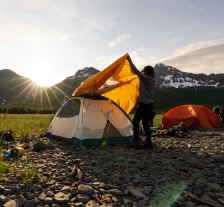
We'll meet in Anchorage and spend our first couple of days getting to know one another and preparing for our backcountry hiking. We’ll check over our gear, learn how to pack our backpacks, shop for food and explore the majestic Chugach Mountains on day hikes.

Backpacking Chugach State Park

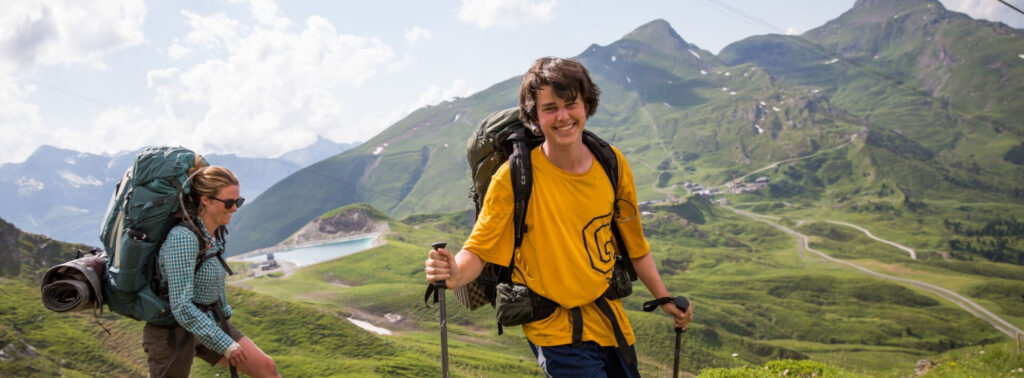
For our first backcountry hike, we’ll head to Chugach State Park which encompasses over a half-million acres of Alaskan wilderness. For four days, we’ll explore valleys and passes, beautiful alpine lakes and glacier-fed rivers as we average five to six miles a day over the rugged terrain. Climbing above tree line with views of snow-capped peaks, we'll hike up the remote Indian Valley, over Ship Lake Pass and into the Williwaw Lakes Valley. We'll carry all of our gear, learn about Leave No Trace principles and work together to enhance our backpacking skills. Although daylight is not a problem in Alaska at this time of year, we'll get out on the trail early and hope to get into camp in the early afternoon to enjoy some time relaxing in our spectacular setting on our summer adventure.

Hiking Denali State Park

Our second backcountry hike will take us to Denali State Park for a four-day ridge hike with views of the Alaska Range and Denali in the distance. After our warm-up hike in the Chugach, we’ll be well prepared for this second backcountry, averaging seven to eight miles per day on the trail. The terrain will vary as we hike over rolling hills and through dense groves of alder and aspen.

Visiting Denali National Park

We’ll also spend a day in Denali National Park to experience one of our nation’s greatest national parks. Denali offers over 6 million acres of wilderness, and we’ll explore the park by bus and foot, hoping to catch a glimpse of moose, caribou, wolves, dall sheep and grizzly bears. In the midst of the glacier-draped Alaska Range, we’ll hike across tundra and braided riverbeds, enjoying the lightness of our daypacks and our spectacular setting.

Sea Kayaking Prince William Sound

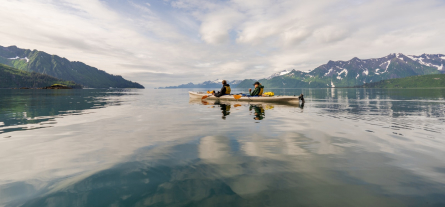
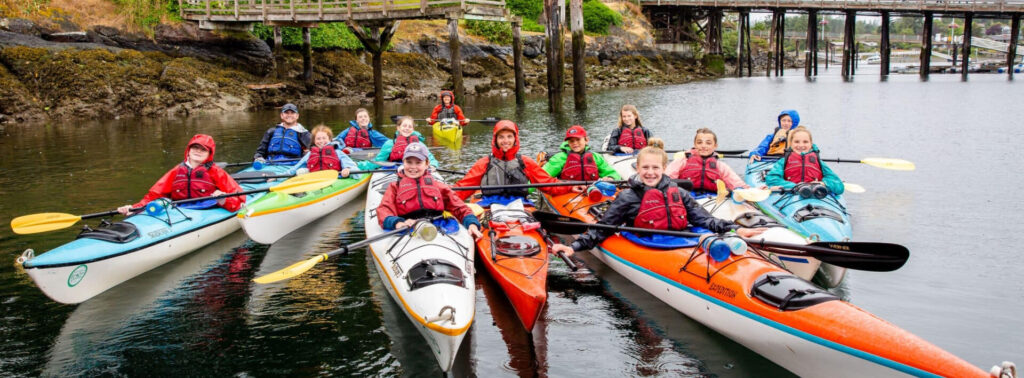
Taking a break from the trail, we’ll spend four days kayaking Prince William Sound with Alaska Sea Kayakers (www.alaskaseakayakers.com). We’ll learn paddling techniques and environmental awareness from our experienced guides as we average six to seven miles daily. We'll keep our eyes peeled for calving glaciers and marine life and spend our nights in tents on beautiful, remote beaches. No previous kayaking experience is required.

Rafting the Nenana River

We'll also enjoy two days of rafting on the Nenana River with experienced Denali Outdoor Center guides (www.denalioutdoorcenter.com). We’ll spend our first day on flat water, enjoying the Alaskan scenery and hoping to spot wildlife as we float downriver. After a night on the banks of the Nenana, we'll tackle Class II and III rapids—an exciting way to finish off our two days on the river!

Trip End

Our trip will end in Anchorage where we’ll look back and celebrate our three amazing weeks together in Alaska!

“Sam had a wonderful time on Alaska Explorer. He loved Alaska, his group of kids and leaders. His postcards could be advertisements in your brochure.” Lisa Corey, Birmingham, Michigan

Trip Details

Here's how a recent leader described Alaska Explorer:

“Overland's Alaska Explorer provides a unique and amazing experience for adventurous teenagers; it is a perfect trip for any student who seeks the challenge and excitement that is found only in traveling through pristine and wild environments. The Chugach Mountains and Denali State and National Parks provide, without a doubt, the best hiking and backpacking I have ever done! A mix of open tundra, dense forest, flat ridgelines and steep hills create a uniquely diverse hiking experience. Glorious mountain passes, vast open tundra, hanging mountain lakes, tall and jagged peaks...the views are amazing! The terrain is unlike any other on earth. While sea-kayaking Prince William Sound, we saw calving glaciers and mountains rising four thousand vertical feet out of the ocean—all while in the company of whales, eagles, sea otters and other ocean wildlife. River rafting with Too-loo-uk River Guides gave our legs a nice rest and was a definite highlight! The guides were wonderful people to work with and we enjoyed their stories about life in the Alaskan bush. Throughout the trip, we enjoyed learning about the culture of Alaska and the people who live there. We brought home glorious photo albums, lasting friendships and enthusiasm for life.”

“Anna raved about her trip! She loved the activities, her new friends and how well prepared her leaders were.” Lisa Bauch, Tewksbury, New Jersey

Photos

Click thumbnails below to enlarge

Before You Go

Enrollment Forms

Below is the Admissions Material packet and other information for Alaska Explorer.

Admission Material 2010

Alaska Explorer Release Form 2010

Prepare & Pack

Alaska Explorer is rated a 7 on a scale of 1-10 (1 is easiest). This rating places Alaska Explorer in a high moderate category and means that participants must be prepared for some long days on the trail and in the kayak (groups hike an average of 7-8 miles per day on the trail as well as paddle 6-8 miles daily while kayaking).

These physical challenges will be accompanied by the Alaskan elements: dramatic weather changes, almost 24 hours of daylight and often buggy conditions. Alaska Explorer participants need to be excited about the challenges that Alaska offers.

Your trip will be significantly more enjoyable if you have a basic level of fitness and well-broken-in boots. We cannot overemphasize the importance of well-broken-in boots. There have been students who have had to leave their trips because of blisters from boots that were not broken in. The training guidelines below are designed to help you properly break in your boots and develop a solid fitness base.

Five weeks before your trip: Wear your boots for 15-30 minutes a day to walk around your house or neighborhood so your boots will begin to conform to your feet.

Four weeks before your trip: Take three 30-minute hikes or walks in your boots.

Three weeks before your trip:
Take three 1-hour hikes or walks in your boots.

Two weeks before your trip:
Take three 1-hour hikes or walks in your boots with a backpack loaded with 10% of your body weight.

One week before your trip:
Take two 2-hour hikes or walks in your boots with a backpack loaded with 15-20% of your body weight.

Your enjoyment of this trip will hinge on several factors:

  1. Your fitness. Any reasonably fit, reasonably active teen will do just fine.
  2. Your motivation. It’s not always easy—you must be motivated!
  3. Your commitment to teamwork. Overland trips require compromise, patience and selflessness. Support your trip leaders and your trip mates, and you’ll find that you will have a great experience.

Experience will vary among participants and no prior kayaking experience is necessary.

Train hard for the trip, be prepared for a challenge and come ready to be an important member of a close-working team.

“Both leaders were always helpful and caring. They were also very entertaining and fun to be with!” Katie Cogar, Baltimore, Maryland

Packing for Your Trip

Our packing list is designed to keep you safe and comfortable while hiking and camping this summer. Nighttime temperatures are much cooler when you are at high elevation than they tend to be in the regions most of us are from. The warm clothing and layers listed may seem unnecessary now, but we guarantee you'll appreciate them this summer! Keep in mind, however, that there are a wide range of products available in terms of clothing and equipment. Overland programs are relatively short, and although you want your clothing and equipment to be durable, this does not mean it has to be top of the line. Oftentimes more basic and less expensive options perform just as well. Some of our favorite brands in terms of quality of product for a reasonable price include REI, EMS and L.L.Bean.

Label the following items with your name, address and phone number.  Bring only what you need and pack everything in your backpack or daypack. You should wear your hiking boots on the plane and carry your sleeping bag and sleeping pad on the plane with you in case your checked luggage fails to arrive on time.

Please bring only the clothes listed below. Do not wear an extra set of clothes for the flight. By layering you will stay cool on warm days, dry on rainy days and warm on cool nights. You will have the chance to do laundry periodically. You will be able to leave some extra items in our van while we are on the trail, but please stick to the packing list. If you have any questions, do not hesitate to contact our office.

Specialized Gear

Overland will rent specialized gear for any of our non-hiking activities. (e.g., rafting) and this is included in your trip fee.

Clothing

  • Fleece Jacket or Pullover & Long Fleece Pants
    The fleece should be medium to heavy weight and reasonably compact. Please don't bring jeans or sweatpants. They are heavy, bulky and will not keep you warm if wet.

  • Synthetic Long Underwear Top or Synthetic Long-Sleeve Shirt and Long Underwear Bottom
    Two or three tops and one bottom. Synthetic material will keep you warm in varying weather and is a comfortable layer to wear while hiking or in camp.

  • Winter Hat and Gloves/Mittens
    For cool nights in camp.

  • Waterproof, Breathable Rain Jacket and Pants
    Your rain gear must be waterproof (not just water and/or wind resistant). GoreTex is one of the better-known waterproof, breathable fabrics, but there are many of these fabrics to choose from. Ponchos are not acceptable as they are difficult to hike in and don't provide the same protection that a rain jacket does.

  • Insulated vest
    An insulated fleece, Thinsulate or down vest will help keep your core warm during cool mornings out on the trail. Be sure it's compactable.

  • Hiking Shorts or Pants
    Two pairs. Synthetic only, no cotton, as cotton absorbs moisture and will not keep you warm when wet. Instead of shorts, you may choose to wear pants while hiking to keep mud, water and snow off your legs and boots.

  • T-Shirts
    Three. Synthetic are recommended; cotton are acceptable. At least one synthetic shirt is recommended because it will dry faster than cotton. One cotton shirt works well for at night in camp.
  • Underwear
    Five.

  • Socks
    Four pairs of thick wool/synthetic blend socks made for hiking. Synthetic socks dry faster after a day on the trail and help protect your feet better than a cotton sock.

  • Pajamas
    One pair only. Pajamas aren't required as many students sleep in shorts and a t-shirt.

  • Bathing Suit
    One only.

  • Sport Sandals
    With a heel strap for rafting, swimming and around camp. No flip-flops or Crocs as these will not be acceptable for rafting and kayaking. If you do not have sport sandals, your sneakers will work fine for rafting, kayaking and around camp.

  • Sneakers or Tennis Shoes
    A comfortable and lightweight alternative to your hiking boots. To be used on short day hikes and in camp when your hiking boots are not necessary.

Hiking & Camping Equipment

  • Hiking Boots
    Waterproof backpacking boots (recommended price range $125 to $175). Choose a comfortable boot that is designed for hiking with a medium weight pack. Your boots should have a durable leather upper that can be treated with waterproofing wax or liquid, or have a waterproof fabric/leather combination. If the boots you like have a GoreTex liner, that is great but your boots do not need to have GoreTex liners to be waterproof; good quality leather when treated properly is waterproof. Follow the waterproofing instructions from the boots' manufacturer prior to the start of your trip; typically you must wear the boots for at least a week before they will accept waterproofing treatment.

  • Backpack
    4,000-5,000 cubic inches. Before you purchase a backpack, find your backpack size by measuring your torso length and your hips. We recommend getting fitted at a store where you can try on a number of different packs.

  • Day Pack
    Your day pack can be used as a carry-on and will be necessary for day hikes. This can be a very basic backpack, maybe even just your school backpack. You should be able to carry it over both shoulders (i.e., NOT a satchel) and it should be big enough to hold your lunch, 2 water bottles, snacks and some extra warm clothes.

  • Sleeping Bag
    We recommend a lightweight, compact, synthetic sleeping bag that is warm to 20 degrees or less. Your sleeping bag should compress enough to fit into your backpack. Some sleeping bags come with a stuff sack which is a small bag that you can stuff your sleeping bag into and then cinch down to make it compact. If your bag does not have one, you can purchase one at most outdoors stores. A stuff sack that compresses your bag to 12" to 20" is recommended. Down bags are not recommended because of the relatively wet damp weather in Alaska. Carry your sleeping bag on the plane with you.
  • Sleeping Pad
     A full length pad that is inflatable like a ThermaRest or a closed cell foam (thin and firm) like a Therma Ridge Rest is appropriate. It should be compact enough to either fit in your pack or be strapped to the outside. Carry your sleeping pad on the plane with you.

  • Water Bottle
    One 1-liter Nalgene (or similar) water bottle. Overland will provide you with a second water bottle on arrival. A Camelbak or similar water bladder is acceptable.
  • Mosquito Head Net
    A mesh net that fits over your head to keep mosquitos away from your face. Handy at night in camp when the bugs are out.
  • Small Safety Whistle
    Plastic or metal with a string or lanyard attached. This is for safety reasons in case a student is separated from the group.

  • Utensils
    For meals you will need a 6" to 8" plastic Tupperware/Rubbermaid (or similar) dish or bowl with a top and a spoon. We also recommend a plastic insulated mug to be used for hot drinks.

Miscellaneous Gear

  • Towel
    Medium size cotton towel or synthetic camping towel.

  • Plastic Bags
    Ten large ziplocks (1-2 gallon) and 4 large trash bags. The trash bags will be used to line your pack and to wrap your sleeping bag and pad in. The ziplocks will be used to organize and waterproof the rest of your gear.

  • Toiletries
    All travel size (in a plastic bag).  If necessary, you will be able to restock en route.

  • Moleskin or Molefoam
    One full package for blister protection.

  • Hat (with a visor, e.g a baseball cap), Sunglasses, Sunscreen (SPF 15+), Chapstick (with SPF protection) & Insect Repellent

  • Paperback Book and/or Journal
    Optional. Your group will collectively keep a group journal, and you will receive a copy of the journal after your trip. If you would like to keep your own journal, you should bring one.

  • Camera/Batteries/Memory Card
  • Optional. Interested in seeing your photographs or videos on Overland's website next year? Bring a camera with lots of pixels (10 or more) and lots of memory (4GB or more). Buying a new camera? One of our favorites is the Canon PowerShot SD960 IS digital camera.

  • Spending Money
    $25/week in cash or with a debit or ATM card for souvenirs, gifts and necessities (like more sunscreen if you run out, or envelopes to mail letters).

Note: Please do not bring any type of knife or multi-tool (e.g., Swiss Army Knife, Leatherman).

We do not permit personal electronics on our programs (e.g., cellphones and iPods). We do, however, allow students who fly to their program to carry a cell phone while traveling; on arrival, Overland's leaders will collect all cell phones for the duration of the program and return them for flights home. Perhaps, a better option would be to bring a pre-paid phone card so that the leaders do not have to carry cell phones for the duration of the program.

Travel Information

Families are responsible for making travel arrangements to and from Anchorage, Alaska. Overland’s leaders will be on hand at the airport to provide supervision and assistance at trip start and end.

FLIGHT ARRIVAL: Anchorage International Airport (AK) between 12:00 noon and 4:00 p.m., 6/27 and 7/18.

FLIGHT DEPARTURE: Anchorage International Airport (AK) between 6:00 a.m. and 10:00 a.m, 7/16 and 8/6.

Drop Off: South Terminal Baggage Claim at 2:00 PM
Pick Up: South Terminal Check-in Area at 8:00 AM

Any other special cases: please call the Overland office to coordinate, if you have not done so already.

Flight & Travel Information 2010

Program Start & End Information 2010

Mail Stops

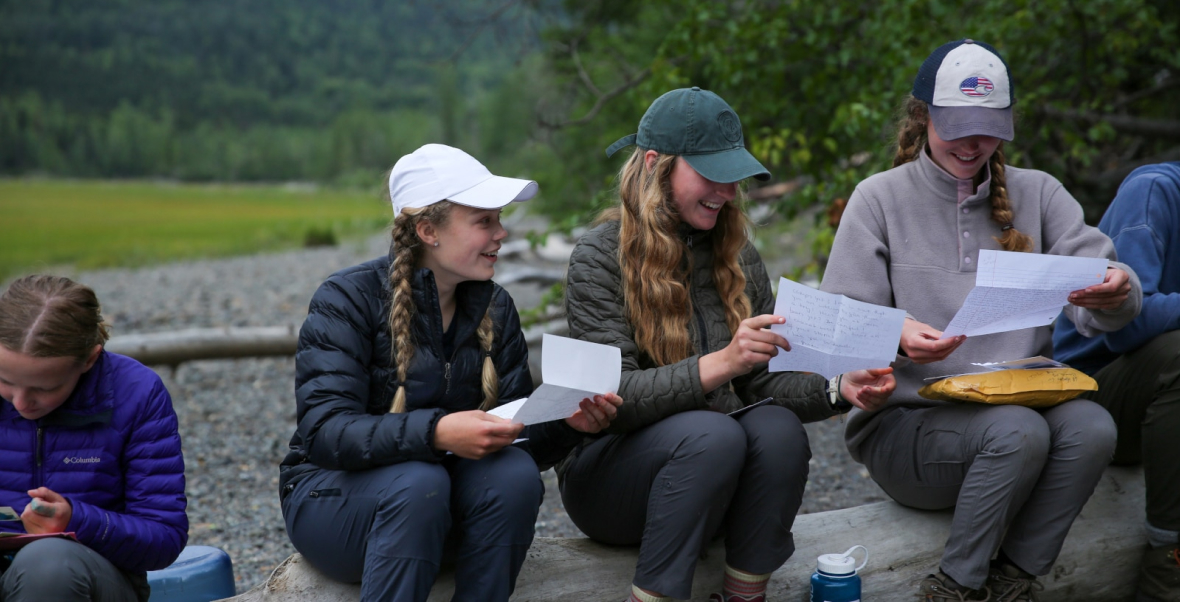
During the trip, students may receive mail sent to the below addresses.

Mail Notes:

1) On the lower left corner of the envelope, please write: "Please hold for Overland."
2) Mail sent to General Delivery addresses can only be sent via the USPS.

Alaska Explorer 1A

Mail Stop #1 – must arrive before July 3rd

Student’s name, Overland Group /AKX 1A
General Delivery
500 South Cobb Street
Palmer, AK 99645-9998

Mail Stop #2 – must arrive before July 15th

Student’s name, Overland Group /AKX 1A
c/o Spenard Hostel,
2845 W. 42nd Ave,
Anchorage, AK 99517

Alaska Explorer 1B

Mail Stop #1 – must arrive before July 6th

Student’s name, Overland Group /AKX 1B
General Delivery
500 South Cobb Street
Palmer, AK 99645-9998

Mail Stop #2 – must arrive before July 15th

Student’s name, Overland Group /AKX 1B
c/o Spenard Hostel,
2845 W. 42nd Ave,
Anchorage, AK 99517

Alaska Explorer 2A

Mail Stop #1 – must arrive before July 24th

Student’s name, Overland Group /AKX 2A
General Delivery
500 South Cobb Street
Palmer, AK 99645-9998

Mail Stop #2 – must arrive before August 5th

Student’s name, Overland Group /AKX 2A
c/o Spenard Hostel,
2845 W. 42nd Ave,
Anchorage, AK 99517

Alaska Explorer 2B

Mail Stop #1 – must arrive before July 27th

Student’s name, Overland Group /AKX 2B
General Delivery
500 South Cobb Street
Palmer, AK 99645-9998

Mail Stop #2 – must arrive before August 5th

Student’s name, Overland Group /AKX 2B
c/o Spenard Hostel,
2845 W. 42nd Ave,
Anchorage, AK 99517
 

Helpful Reminders

Checklist and Reminders 2010

Apply Now

We welcome your interest in joining Overland this summer!

To apply, please complete and sign the application on page 47 of the Overland catalog or download an application. (You will need Adobe Acrobat Reader to download the application).

Please refer to page 46 of our catalog for important information you should know before signing the application.

Send your application and $795 deposit to:

Overland
P.O. Box 31
Williamstown, MA 01267

For overnight mail via UPS or FedEx, please use our street address:

Overland
63 Spring Street
Williamstown, MA 01267

Sorry, we are unable to accept applications by fax, and we do not take credit cards. Applications are reviewed in the order in which they arrive at our office and we cannot hold spots over the phone.

To learn about our admissions process, please click here.

Leader Profile

Emily Johnston

Emily Johnston

Hometown
Hingham, Massachusetts
School
Hamilton College
Leadership
Cape Cod & the Islands, New England Service
More about Emily »

See More Overland Leaders

Check out photos from Alaska Explorer

Check out our photo gallery

Find us on Facebook   Watch us on YouTube

Travel Abroad or Travel the US

United States | New England | Western US | Alaska | Hawaii | Canada | Costa Rica | Virgin Islands | Peru | Europe | Tanzania

Summer and Semester Programs

Overland Programs offers more than 40 different trips including New England summer camps and hiking adventures for tweens (5th graders and 6th graders), hiking trips for teens, teen bike trips in Europe and America, and teen summer service programs. Whether you're looking for a language immersion program, summer programs abroad or service programs abroad, summer writing programs, environmental studies programs, teen adventure travel trips, a field studies program, or even a gap year semester in Spain, you're sure to find a program here which will create lasting memories, capture the imagination, and strengthen physical, emotional and social skills. Overland is not simply a summer or semester-long experience—it's a life experience with value and resonance that extends far beyond the boundaries of a young person's time with us.


Elite Leaders

Overland leaders are students and recent alumni from top colleges and universities, including many schools in the Ivy League and NESCAC as well as other elite schools across the country. Overland leaders are campus leaders, varsity athletes, sports captains, peer counselors, outdoor guides, and honors students. All leaders are First Aid, CPR, and lifeguard certified.

Programs and Adventures Since 1984

Overland Programs, also known as Overland Summers and even as Overland Adventures, is proud to have ACA accredited summer programs, teen summer camps, teen summer adventures, teen travel, teen summer programs, teenage camps, teen adventure programs, teen adventure trips, summer camp programs, summer programs abroad, language immersion courses abroad, teen bike trips, teen bicycle tours, teen summer service programs and New England camps which are held to the highest safety standards. Overland is not a teen tour or a summer camp, our trips and programs are carefully crafted and designed to challenge our students, who are always in small groups with superlative leadership.


MA Education Web Design Copyright 2010 Overland All rights reserved